A wasp sting hurts. There’s no way around that.
One second you’re enjoying a picnic, the next your arm is on fire. Most people will deal with a wasp sting at some point. The good news? For most people, it’s painful but not dangerous. It fades in a day or two.
But for some, a wasp sting can be serious. Knowing the difference matters.
This guide covers what a wasp sting does to your body, how to treat it at home, and the warning signs that mean you need medical help right away.
What Happens When a Wasp Stings You
A wasp injects venom through a stinger. The venom contains proteins and enzymes that trigger pain, redness, and swelling at the site .
Unlike honeybees, wasps don’t lose their stinger. They can sting multiple times . That’s one reason wasp stings can escalate quickly if you’re near a nest.
The venom itself isn’t usually dangerous to a healthy adult. But the immune system’s reaction to it can be.
Common Symptoms of a Wasp Sting
Most people experience what doctors call a “local reaction.” That means symptoms stay near the sting site.
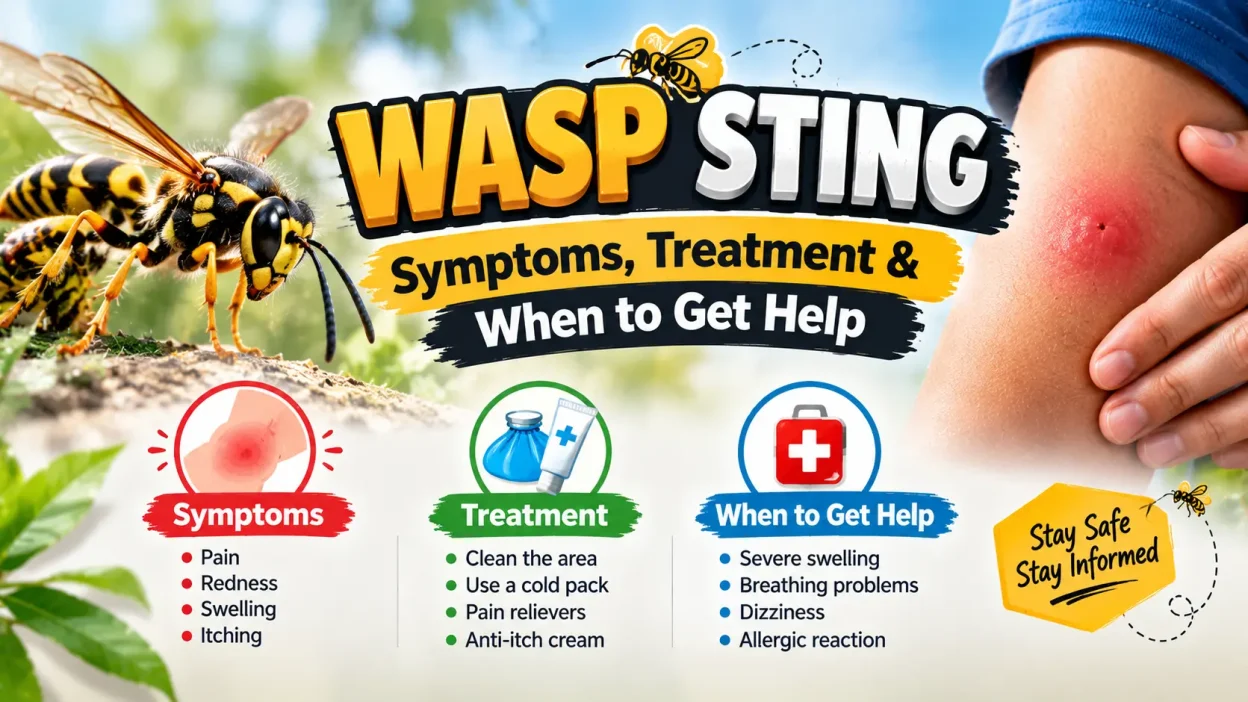
Typical symptoms include :
- Sharp, burning pain right away
- Redness around the sting
- Swelling that may grow over 2–3 days
- Itching
- A warm feeling at the site
- A raised, tender bump
The swelling can surprise you. Some stings swell to the size of a golf ball within a couple of days . That’s normal for many people, even without an allergy.
Important: Wasps do not leave a stinger behind. If you see a stinger, it’s from a bee .
How to Treat a Wasp Sting at Home
You can handle most wasp stings without a doctor. Here’s what actually works.
Step 1: Clean the Area
Wash the sting site with soap and water . This reduces the chance of infection.
Step 2: Apply Cold
Ice is your best friend here. Wrap an ice pack in a cloth and apply it to the sting for 10–15 minutes, then take it off for the same amount of time. Repeat as needed .
Cold reduces pain and swelling. Don’t put ice directly on your skin — always use a barrier.
Step 3: Reduce Itching and Swelling
Over-the-counter options that help :
- Antihistamine cream (like diphenhydramine) for itching
- Hydrocortisone cream for redness and swelling
- Oral antihistamines (like Benadryl) if itching is widespread or bothersome
- Pain relievers like ibuprofen or acetaminophen for pain
Step 4: Don’t Scratch
Scratching breaks the skin and opens the door for infection . If the itch is unbearable, cold compresses and antihistamines are your tools. Not your fingernails.
Step 5: Remove Tight Items
If the sting is on your hand or arm, remove rings or bracelets before swelling starts . Once swelling sets in, jewelry can become stuck and cut off circulation.
What About Home Remedies?
You’ll find a lot of advice online. Some of it works. Some of it doesn’t.
Vinegar or lemon juice: Some sources say wasp venom is alkaline and can be neutralized with acid . Others say this doesn’t help and may irritate the skin . The evidence is mixed. Cold water and ice are more reliable.
Onion, toothpaste, mud: No scientific support. Skip them.
Hot water: One case series found that hot water irrigation (about 2 minutes) provided immediate relief for pain and itching after wasp stings . This isn’t standard first aid yet, but some doctors are using it. If you try it, be careful not to burn yourself.
Bottom line: Soap, water, and cold compresses. Simple and effective.
When a Wasp Sting Is an Emergency
Some people are allergic to wasp venom. For them, a single sting can be life-threatening.
An allergic reaction is called anaphylaxis. It usually starts within minutes but can be delayed up to an hour or more .
Call emergency services immediately if you see :
- Difficulty breathing or wheezing
- Swelling of the face, lips, tongue, or throat
- Hives or rash spreading across the body
- Dizziness or fainting
- Rapid drop in blood pressure
- Nausea, vomiting, or stomach cramps
- A feeling of doom or panic
- Loss of consciousness
If the person has an epinephrine auto-injector (EpiPen), use it immediately. Don’t wait for symptoms to get worse. Then call for help .
Anaphylaxis can kill within minutes without treatment. This is not the time to “wait and see.”
Wasp Stings in Dangerous Locations
Where you get stung matters.
Mouth and throat stings are emergencies. If a wasp stings you inside your mouth or throat, swelling can block your airway. Go to the emergency room immediately. Suck on ice cubes on the way to reduce swelling .
This happens more often than you’d think. Wasps crawl into open soda cans and then get swallowed. That’s why drinking from a can outdoors is risky .
Eye stings also need medical attention. The swelling can damage the eye.
Stings on the genitals or other sensitive areas should be checked by a doctor.
How Many Stings Are Dangerous?
For a non-allergic person, it takes a lot of venom to cause serious harm.
One estimate says an average adult can tolerate over 1,000 stings. A child could be killed by around 500 .
But that’s total venom load, not a practical guide. What matters more:
- More than 20 stings in an adult may require hospitalization
- More than 5 stings in a child should be evaluated
If you disturb a nest and get swarmed, leave the area immediately. Run indoors or jump into water . Then seek medical attention.
How to Prevent Wasp Stings
The best treatment is not getting stung in the first place.
What attracts wasps :
- Sweet drinks and food
- Open garbage
- Perfume, scented lotions, and hairspray
- Bright or dark clothing (light colors attract fewer wasps)
- Sweat and strong body odor
- Fallen fruit in yards
How to reduce your risk :
- Keep food and drinks covered outdoors
- Use cups instead of cans (you can see inside a cup)
- Clean up immediately after eating
- Wear light-colored, long-sleeved clothing
- Avoid strong scents
- Don’t walk barefoot in grass
- Stay calm if a wasp flies near you — don’t swat
- Check for nests around your home before doing yard work
If a wasp lands on you: Stay still or brush it away gently. Don’t swat. Swatting triggers stinging .
If You Have a Known Allergy
Wear a medical alert bracelet. Carry two doses of epinephrine at all times. Make sure the people around you know where it is and how to use it .
Talk to your doctor about venom immunotherapy. This is a series of shots that can desensitize you to wasp venom over time. It’s highly effective and can be life-saving for people with severe allergies .
Final Thoughts
A wasp sting hurts. It swells. It itches. And then it usually goes away.
For most people, home treatment works fine: clean the area, apply cold, and don’t scratch. Give it a day or two.
But watch for signs of a serious reaction. Difficulty breathing, swelling in the face or throat, or feeling faint means emergency care, not home remedies.
Have you dealt with a wasp sting before? What helped? Share this guide with someone who spends time outdoors — and drop a comment with your best first-aid tip.