Dyspnea is the medical word for shortness of breath, the uncomfortable feeling that you can’t get enough air. It’s one of the most common reasons people show up in emergency rooms and doctor’s offices, and it can range from a brief, mild annoyance after climbing stairs to a sign that something is seriously wrong with your heart or lungs.
If you’ve just heard the term from a doctor or found it while searching your symptoms, this guide walks through what it means, what typically causes it, and how to figure out whether you need help right now or can manage it on your own.
What Is Dyspnea?
Dyspnea describes the sensation of labored or difficult breathing. It’s not the same thing as breathing fast (that’s called tachypnea), although the two often happen together. Someone with dyspnea might describe it as:
- Feeling like they can’t take a full breath
- A tightness or heaviness in the chest
- Needing to work harder than usual to breathe
- A sense of suffocating or air hunger
It’s a symptom, not a disease on its own. Your body triggers this sensation when it senses a mismatch between how much oxygen it needs and how much it’s getting, or when something is physically restricting your lungs or airways.
When Shortness of Breath Is a Medical Emergency
Before getting into causes, here’s the part that matters most if you’re reading this because you’re breathless right now.
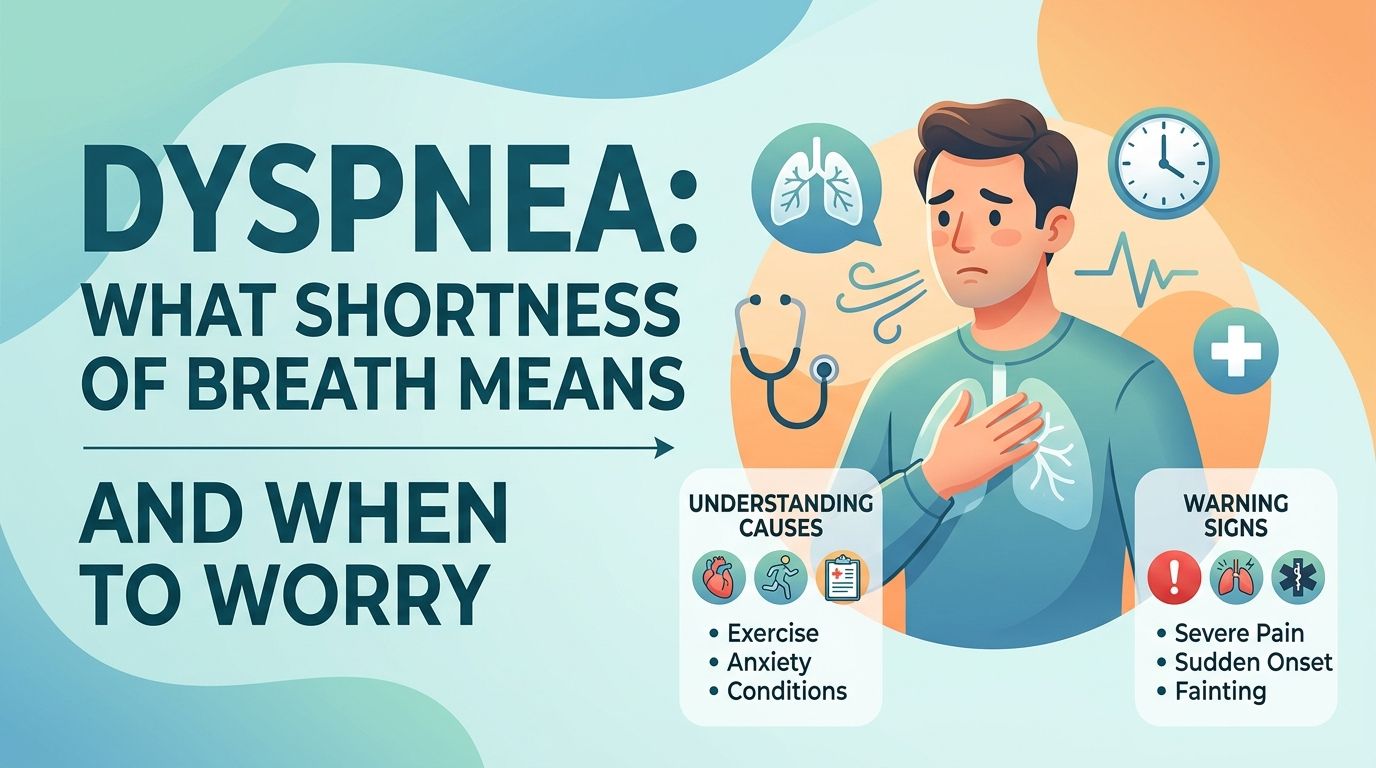
Call 911 or get to an emergency room immediately if shortness of breath comes on suddenly and is severe, or if it’s paired with any of these:
- Chest pain or pressure
- Blue or gray lips, fingertips, or face
- Confusion, dizziness, or fainting
- Breathing that sounds like gasping
- Rapid heartbeat with breathlessness at rest
- Swelling in one leg along with breathlessness (a possible sign of a blood clot that has traveled to the lungs)
These combinations can point to a heart attack, pulmonary embolism, severe asthma attack, or another emergency. It’s not a situation where waiting to see if it passes is the safer choice.
If your breathlessness is mild, gradual, and you can still speak in full sentences, it’s reasonable to keep reading and decide on next steps from there.
Common Causes of Dyspnea
Sudden (Acute) Causes
Acute dyspnea shows up over minutes to hours. Common triggers include:
- Asthma attacks, where airways narrow and swell
- Pneumonia or other lung infections
- Pulmonary embolism, a blood clot blocking blood flow in the lungs
- Heart attack, which can cause breathlessness even without obvious chest pain
- Allergic reactions, especially anaphylaxis
- Panic attacks, which can feel physically identical to a heart or lung emergency
- Choking or airway obstruction
Long-Term (Chronic) Causes
Chronic dyspnea develops gradually, often over weeks, months, or years. It’s frequently tied to an ongoing condition:
- COPD (chronic obstructive pulmonary disease), usually linked to smoking
- Heart failure, where the heart can’t pump efficiently enough to meet the body’s demands
- Pulmonary fibrosis, scarring of lung tissue
- Anemia, where low red blood cell counts limit oxygen delivery
- Obesity, which can restrict lung expansion and increase the effort of breathing
- Deconditioning, meaning a general lack of cardiovascular fitness
Shortness of Breath from Anxiety
Anxiety and panic disorders deserve their own mention because they’re a genuinely common cause of dyspnea, not just a footnote. During a panic attack, breathing can become fast and shallow, leading to a real physical sensation of not getting enough air. This is sometimes called hyperventilation syndrome.
The tricky part is that anxiety-related breathlessness can feel exactly like something more dangerous, and health conditions can also trigger anxiety about breathing. If you’re not sure which one you’re dealing with, especially the first time it happens, treat it as a medical symptom and get it checked rather than assuming it’s “just anxiety.”
Types of Dyspnea
Doctors often ask about the pattern of your breathlessness because it narrows down the likely cause.
Exertional Dyspnea
This is breathlessness that shows up during physical activity, like walking uphill or climbing stairs, and eases with rest. Mild exertional dyspnea is normal, especially if you’re out of shape or at high altitude. But if it’s happening with less and less activity than it used to take, or during things that never used to bother you, it’s worth mentioning to a doctor.
Orthopnea
Orthopnea is shortness of breath that happens when lying flat and improves when sitting up. People with this symptom often end up sleeping propped up on extra pillows. It’s a classic sign of heart failure, where fluid redistributes in the body when you lie down and puts extra pressure on the lungs.
Paroxysmal Nocturnal Dyspnea
This is a sudden episode of severe breathlessness that wakes someone up, usually a couple of hours after falling asleep. It often forces the person to sit up or get out of bed to catch their breath. Like orthopnea, it’s strongly associated with heart failure and should prompt a medical evaluation.
How Doctors Diagnose Dyspnea
Because so many different conditions can cause shortness of breath, diagnosis usually starts with a detailed history and physical exam, followed by targeted tests. Common ones include:
- Pulse oximetry, a quick clip-on sensor that measures blood oxygen levels
- Chest X-ray, to look for pneumonia, fluid, or lung abnormalities
- Spirometry, a breathing test that measures lung function and helps diagnose asthma or COPD
- Blood tests, including a complete blood count to check for anemia and specific markers for heart strain
- Electrocardiogram (ECG), to check heart rhythm and look for signs of heart attack
- Echocardiogram, an ultrasound of the heart to assess pumping function
- CT scan, particularly useful for detecting pulmonary embolism or lung disease in more detail
Which tests get ordered depends heavily on how the dyspnea started, how long it’s lasted, and what other symptoms are present.
Treatment Options for Dyspnea
Treatment targets the underlying cause rather than the sensation of breathlessness itself, though some approaches do both.
- Bronchodilator inhalers open the airways in asthma and COPD
- Steroids (inhaled or oral) reduce airway inflammation
- Antibiotics treat bacterial infections like pneumonia
- Diuretics help the body clear excess fluid in heart failure, easing pressure on the lungs
- Oxygen therapy supports people with low blood oxygen levels
- Blood thinners treat and prevent clots in pulmonary embolism
- Pulmonary rehabilitation combines supervised exercise, education, and breathing techniques for people with chronic lung disease
- Anti-anxiety treatment, including therapy and sometimes medication, for breathlessness tied to panic disorder
Managing Dyspnea at Home
For mild, ongoing breathlessness that’s already been evaluated by a doctor, some strategies can make day-to-day breathing easier:
- Pursed-lip breathing: inhale through the nose, then exhale slowly through pursed lips, like you’re blowing out a candle. This helps keep airways open longer during exhalation.
- Diaphragmatic breathing: focus on breathing from the belly rather than the chest, which can make each breath more efficient.
- Pacing activities: break tasks into smaller chunks with rest in between instead of pushing through until you’re winded.
- Positioning: leaning forward slightly with arms supported on a table (sometimes called the tripod position) can ease the work of breathing during an episode.
- Avoiding triggers: for people with asthma or COPD, this might mean staying away from smoke, strong fragrances, cold air, or known allergens.
- Staying active within limits: regular, moderate exercise approved by a doctor can improve cardiovascular fitness and actually reduce chronic breathlessness over time.
These strategies help manage symptoms. They aren’t a substitute for treating whatever is causing the dyspnea in the first place.
When to See a Doctor for Shortness of Breath
Beyond the emergency signs covered earlier, it’s worth booking an appointment if:
- Breathlessness is new and hasn’t been explained
- It’s getting worse over days or weeks
- It’s interfering with sleep, work, or daily activities
- It happens with a persistent cough, wheezing, or unexplained weight change
- You notice swelling in your ankles or legs along with breathlessness
- You have risk factors like smoking history, heart disease, or a family history of lung conditions
Bringing a symptom diary to the appointment, noting when it happens, what makes it better or worse, and any other symptoms, can speed up diagnosis significantly.
5. FAQs
What does dyspnea feel like?
It’s usually described as a sense of not getting enough air, chest tightness, or having to work harder than normal to breathe. Some people feel like they’re suffocating, while others just notice they’re more winded than usual for the activity they’re doing.
Can dyspnea go away on its own?
It depends entirely on the cause. Breathlessness from mild exertion or a brief panic episode often resolves with rest. Breathlessness from an underlying condition like asthma, heart failure, or infection usually needs treatment to improve and can get worse if left unaddressed.
Is shortness of breath always related to the lungs?
No. While lung conditions are a common cause, the heart, blood (anemia), body weight, fitness level, and even anxiety can all cause dyspnea. That’s part of why a proper evaluation matters instead of guessing at the cause.
How is dyspnea different from tachypnea?
Dyspnea is the subjective feeling of breathlessness. Tachypnea is an objective measurement, meaning a faster than normal breathing rate. You can have one without the other, though they frequently occur together.
Should I use a pulse oximeter at home if I have shortness of breath?
A pulse oximeter can give useful information, but a normal reading doesn’t rule out a serious problem, and it shouldn’t replace medical evaluation if you’re genuinely struggling to breathe. It’s a helpful data point, not a diagnostic tool on its own.
6. Conclusion
Dyspnea is a common symptom with causes ranging from a brisk walk on a hot day to conditions that need urgent treatment. The pattern matters: sudden and severe breathlessness, especially with chest pain, confusion, or blue-tinged lips, is an emergency. Gradual breathlessness that builds over weeks deserves a proper checkup rather than guesswork. Getting the right diagnosis is what actually improves the breathlessness, since treating the underlying cause works far better than just riding it out.