If you’ve ever come inside from the yard with an itchy patch of skin and a nagging feeling you brushed against something you shouldn’t have, you already know why people search for this. Poison ivy is one of the most common causes of allergic skin reactions in the United States, and most of what people believe about it, including that the rash “spreads” or that scratching makes it worse for other people, isn’t quite right.
This guide covers what the plant actually looks like, what the rash does over time, how long you’re stuck with it, whether you can pass it to someone else, and what actually helps.
What Is Poison Ivy?
Poison ivy is a plant, not a poison in the traditional sense. It grows across most of the continental US, in wooded areas, along trails, in fields, and even in suburban backyards and gardens. It produces an oily resin called urushiol on its leaves, stems, and roots. Urushiol is what triggers the allergic skin reaction most people know as a poison ivy rash. The plant itself isn’t dangerous to touch in the way a thorn or a sharp object is. The problem is entirely the oil, and how your immune system reacts to it.
Two other plants, poison oak and poison sumac, contain the same oil and cause the same type of reaction. They’re often lumped together, but they don’t look identical, which matters if you’re trying to figure out what you actually touched.
What Does Poison Ivy Look Like?
The old saying “leaves of three, let it be” is a decent starting point, but it undersells how much poison ivy can vary in appearance depending on where it’s growing and the time of year.
Poison Ivy Leaves
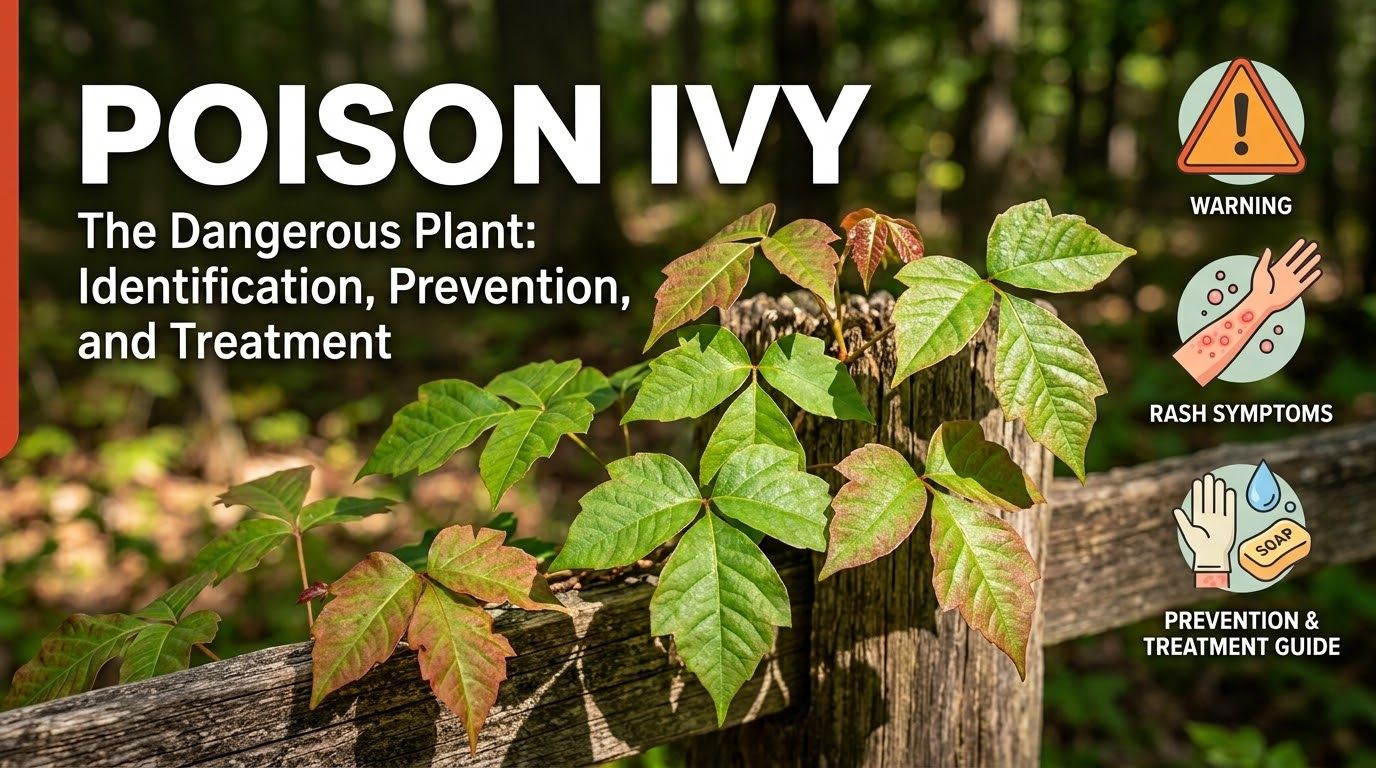
Each leaf is made up of three leaflets: one at the tip and two facing each other along the sides. The middle leaflet usually has a slightly longer stem than the two side leaflets, which is one of the more reliable identifying details. Leaf edges can be smooth, toothed, or lobed, even on the same plant, so texture alone won’t confirm it. Leaves typically start out reddish in spring, turn green through summer, and shift to yellow, orange, or red in the fall, which is part of why identification trips people up. A plant that looked green and unremarkable in July can look almost decorative by October.
Poison Ivy Vines and Growth Patterns
Poison ivy doesn’t grow the same way everywhere. It can appear as a low, ground-level plant, a shrub, or a climbing vine that wraps around trees and fences. Climbing vines are often covered in small, hair-like aerial roots that make the vine look fuzzy or rope-like against tree bark. In late summer and fall, mature plants may produce small greenish-white berries, which birds eat and which help the plant spread.
How It Changes by Season
In spring, new leaves tend to be shiny and reddish. By summer they’re fully green and can look almost identical to several harmless garden plants, which is when misidentification is most common. In fall, the color shift toward red and orange is often what finally catches people’s attention. In winter, the leaves drop, but the vines and roots are still active, and the urushiol oil remains present on bare stems and roots, so winter contact is still a real risk, even though it’s less commonly reported.
Poison Ivy vs. Poison Oak vs. Poison Sumac
PlantLeafletsTypical GrowthCommon RegionPoison ivy3 leaflets, pointed tipsVine or shrubNearly all US statesPoison oak3 leaflets, rounded, oak-like edgesLow shrubMostly Western and Southeastern USPoison sumac7 to 13 leaflets per stemTall shrub or small treeWet, wooded areas, especially Southeast
All three cause the same type of reaction because they share the same allergen, urushiol.
What Causes the Poison Ivy Reaction
The rash is a form of allergic contact dermatitis. When urushiol touches skin, it binds to skin cells within minutes. The immune system treats it as a foreign invader and mounts a delayed response, which is why the rash doesn’t show up instantly. This is not an infection and not a toxin working its way through your body. It’s your own immune system reacting to a substance it now recognizes as a threat.
Most people are allergic to urushiol, and sensitivity can actually increase with repeated exposure over a lifetime. Someone who never reacted as a kid can develop a strong reaction as an adult after enough exposures. A smaller number of people seem naturally less reactive, though doctors generally don’t recommend testing that theory on purpose.
Poison Ivy Rash: Symptoms and Timeline
When Does the Rash Show Up?
Timing depends on whether you’ve been exposed before. If this is your first meaningful exposure, the rash may take one to two weeks to appear, because your immune system is building a response for the first time. If you’ve reacted to poison ivy before, the rash usually shows up much faster, often within 12 to 48 hours, since your immune system already “knows” what to look for.
What Poison Ivy Rash Looks Like
The rash typically starts as redness and intense itching, followed by raised bumps or streaks, and then fluid-filled blisters. Streaky or linear patterns are common, since they often mirror the path where a leaf or vine brushed against the skin. Areas with thinner skin, like the inner arms, neck, and face, tend to react more severely than thicker skin like the palms or soles.
It’s worth noting that reaction severity isn’t purely about how much oil touched the skin. Sensitive individuals can develop a significant rash from a very small amount of contact, while a brief touch for someone less sensitive might barely react at all.
How Long Does Poison Ivy Last?
For most people, a poison ivy rash runs its course in one to three weeks. Mild cases may clear closer to the one-week mark, while more severe reactions, especially those affecting the face, eyes, or genitals, or that lead to widespread blistering, can take three weeks or longer, particularly if scratching leads to broken skin and secondary irritation.
A few things affect how long it lasts:
-
How much urushiol contacted the skin and for how long before washing
-
Where on the body the reaction occurred
-
Whether the area gets scratched open, which can prolong healing and risk infection
-
Individual immune sensitivity
New patches sometimes appear days after the first ones, which makes it look like the rash is “spreading” over time. In most cases, this isn’t the rash moving. It’s the result of urushiol having contacted different areas of skin at slightly different times, or trace oil that wasn’t fully washed off during initial exposure, producing a delayed response in those spots.
Is Poison Ivy Contagious?
Can You Catch It From Someone Else’s Rash?
No. The rash itself is not contagious. Poison ivy dermatitis is your immune system reacting to urushiol, not an infection you can pass through skin contact, coughing, or being near someone. Touching someone’s blisters, or even the fluid inside them, will not give you a rash. That fluid is your body’s own serum, not the allergenic oil, and it carries no urushiol.
What Actually Spreads It (Clothes, Pets, Tools)
What can spread the reaction is the oil itself, if it’s still present on a surface. Urushiol can stay active on unwashed clothing, shoes, gardening gloves, tools, and even pet fur for a long time, in some cases months, if it isn’t cleaned off. So if you handled contaminated clothes or pet a dog that walked through poison ivy and then touched your face, you could develop a new rash. That’s oil transfer, not contagion from the rash itself.
This distinction matters because it changes what you should actually do: wash exposed clothing and gear rather than avoiding contact with a person who already has the rash.
Poison Ivy Treatment
At-Home Care
For mild to moderate reactions, home care is usually enough:
-
Wash the area with soap and cool water as soon as possible after exposure to remove remaining oil.
-
Apply cool, wet compresses to reduce itching and inflammation.
-
Take cool showers or oatmeal baths to soothe widespread irritation.
-
Keep fingernails short and avoid scratching to reduce the risk of breaking skin and introducing infection.
-
Leave blisters alone rather than popping them.
Over-the-Counter Options
-
Calamine lotion helps dry out blisters and reduce itching.
-
Hydrocortisone cream can calm mild to moderate inflammation on smaller areas.
-
Oral antihistamines (like diphenhydramine) can help with itching, especially at night, though they work on the itch response rather than the rash itself.
-
Colloidal oatmeal products are commonly used for soothing irritated, itchy skin.
When to See a Doctor or Go to the ER
Home care isn’t enough in every case. Seek medical attention if:
-
The rash covers a large portion of the body
-
It affects the face, eyes, mouth, or genitals
-
Blisters are oozing pus, or the area feels increasingly warm, swollen, or painful, which can signal infection
-
The rash isn’t improving after a couple of weeks
-
You have difficulty breathing or swelling of the face or throat, which can happen if urushiol particles were inhaled, for example from burning poison ivy plants. This is a medical emergency and needs immediate care.
A doctor may prescribe a stronger topical steroid or, for severe or widespread reactions, an oral corticosteroid to bring the inflammation down faster than over-the-counter products can manage alone.
What to Do Immediately After Poison Ivy Exposure
If you know you just brushed against poison ivy, acting fast can meaningfully reduce or even prevent a reaction:
-
Rinse the area with lukewarm water and soap within 30 minutes if possible. Urushiol starts binding to skin quickly, so speed matters more than the type of soap you use.
-
Avoid hot water at first, since it can open pores and may worsen absorption in some cases.
-
Remove and wash any clothing, shoes, or gloves that may have touched the plant, using regular detergent, separately from other laundry.
-
Wipe down tools, gardening equipment, and any pet that may have walked through the area, since dried oil can remain active on surfaces.
-
Avoid touching your face or other body parts until you’ve washed your hands thoroughly, since transferring residual oil is how a small exposure turns into a larger rash.
How to Prevent Poison Ivy Rash
-
Learn to recognize the plant in your specific region and season, since appearance shifts throughout the year.
-
Wear long sleeves, pants, and gloves when clearing brush, hiking off-trail, or doing yard work in areas where poison ivy is known to grow.
-
Consider a barrier cream containing bentoquatam before high-exposure activities, which can reduce how much urushiol reaches the skin.
-
Never burn poison ivy plants. Smoke can carry urushiol particles, and inhaling them can cause a severe reaction in the lungs and airways.
-
Keep pets on marked trails where possible, and bathe them after they’ve been in wooded or overgrown areas.
Poison Ivy Costume: A Quick Note
Separate from the plant itself, “poison ivy costume” is a common search around Halloween, usually referring to the DC Comics villain Poison Ivy rather than the plant. If that’s what brought you here, you’re looking for a costume idea rather than health information, and this article won’t cover styling or costume options. If you’re dealing with an actual rash from the plant, the treatment guidance above applies regardless of the time of year.
FAQs
How long does poison ivy last on skin?
Most poison ivy rashes clear up within one to three weeks. Mild reactions often resolve closer to a week, while severe or widespread cases, especially if scratched open, can take longer.
Is poison ivy contagious once the rash appears?
No. The rash cannot be passed from person to person through skin contact or blister fluid. It can only spread if urushiol oil is still present on skin, clothing, tools, or fur and gets transferred to new areas or another person.
What does poison ivy look like compared to other plants?
Poison ivy typically has three pointed leaflets per leaf, with the middle leaflet on a longer stem than the two side leaflets. It can grow as a vine, shrub, or ground cover, and its color shifts from reddish in spring to green in summer to red or orange in fall.
Can you become immune to poison ivy?
Not reliably. Some people react less than others, but sensitivity to urushiol can also increase with repeated exposure over time. There’s no dependable way to build lasting immunity, and assuming you’re immune can lead to more careless exposure.
What should I do if I think I touched poison ivy but don’t have a rash yet?
Wash the area with soap and water as soon as you can, ideally within 30 minutes, and wash any clothing or gear that made contact. Watch the area over the following days, since a rash can take anywhere from several hours to two weeks to appear depending on your prior sensitization.
Conclusion
Poison ivy causes a lot of confusion mainly because the rash behaves in ways that seem to defy explanation, showing up late, appearing to spread, and lingering for weeks. Once you understand that it’s an oil-triggered immune reaction rather than an infection, most of that confusion clears up. Identifying the plant correctly, washing exposure sites quickly, treating symptoms with the right products, and knowing when a rash needs medical attention will get most people through it without much trouble. If symptoms are severe, cover sensitive areas like the face or eyes, or show signs of infection, it’s worth getting a doctor involved rather than waiting it out.