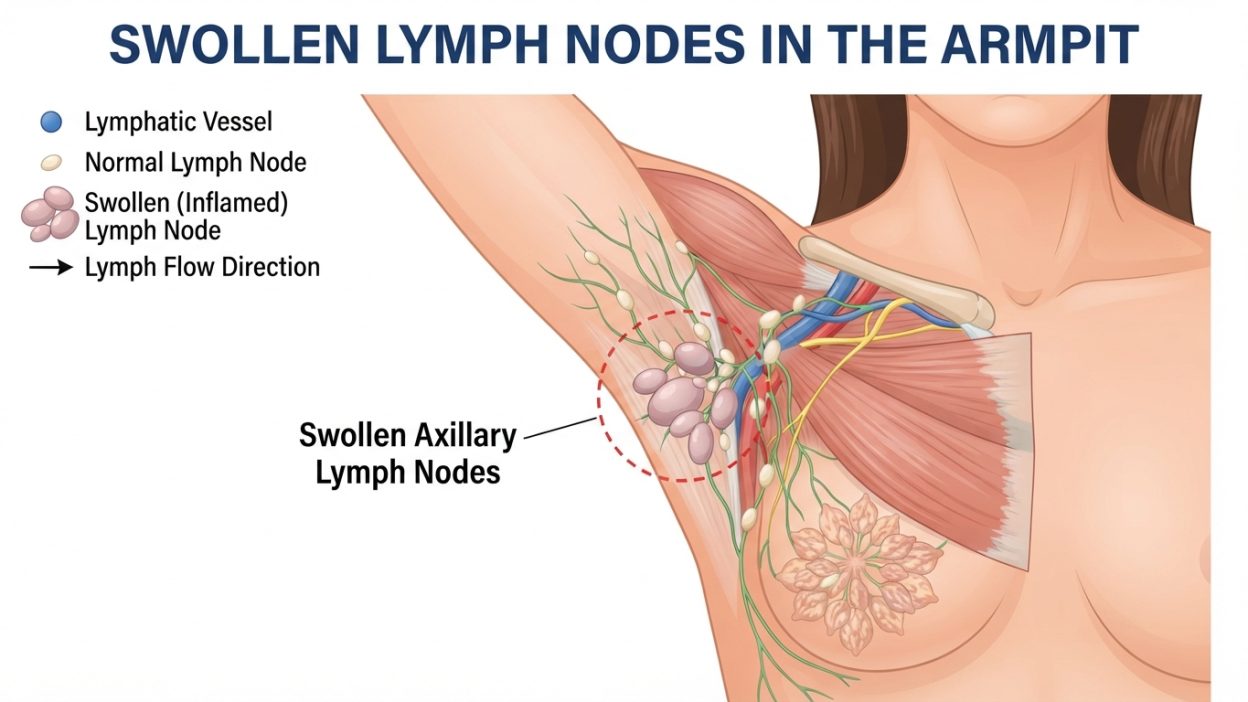
You felt something under your arm. Maybe in the shower, maybe getting dressed. Now you’re searching for pictures to compare it against, trying to figure out whether what you’re feeling looks like cancer.
I want to be useful here, so let me start with the most important thing: comparing your lump to photos online will not tell you what it is. Not because the right picture doesn’t exist, but because the thing that distinguishes a cancerous lymph node from a harmless one isn’t really visible in a photo. It’s about texture, mobility, how long it’s been there, and what else is going on in your body. A swollen node from a mild infection and a swollen node from something serious can look identical from the outside.
So instead of photos, here’s what actually helps: understanding what’s common, what’s rare, and which specific features make doctors take a closer look.
First, the Reassuring Part
Most armpit lumps aren’t cancer. Not “probably not,” but genuinely, most of them.
Infection is by far the most common cause of swollen lymph nodes anywhere in the body. Your armpit happens to hold one of the largest clusters of lymph nodes you have, so they react to a lot: a cold, a cut on your hand, an ingrown hair, even an allergic reaction to a new deodorant.
Beyond that, plenty of armpit lumps aren’t lymph nodes at all. Cysts, blocked or inflamed hair follicles, boils, ingrown hairs, and minor injuries from a fall or a hard pull on the arm all produce lumps in the same area.
Cancer is on the list, but it’s near the bottom of it.
What Doctors Actually Look For
Since you can’t tell by looking, here’s what clinicians pay attention to instead.
Texture. A benign, reactive lymph node tends to feel soft to rubbery, roughly the shape of a lima bean. Nodes that raise more concern tend to feel rock hard and rounder, more like a marble than a bean.
Mobility. A node that slides around a bit under your fingers when you press on it is generally less concerning than one that feels fixed in place, like it’s anchored to the tissue underneath.
Pain. This one surprises people. A tender, painful node is usually the more reassuring version, because pain typically means inflammation from infection. Painless swelling gets more attention, not less.
Timeline. This is probably the single most useful signal. Benign swelling usually settles down within about two to four weeks as whatever caused it resolves. Something that persists past that, or keeps getting bigger, needs a look.
What else is happening. If you’ve got a cold, a sore throat, an infected cut on that arm, or a rash, the swollen node has an obvious explanation. If there’s no illness, no injury, nothing, that absence of explanation matters.
The Symptoms That Change the Picture
A few things alongside a swollen node shift it from “probably watch it” to “get it checked soon”:
- Unexplained fever
- Night sweats, meaning soaking through clothes or sheets, not just feeling warm
- Weight loss you didn’t intend
- Persistent fatigue that rest doesn’t touch
- Swelling in multiple areas at once (neck, groin, armpit together)
- A node that keeps growing over weeks
- Any change in the breast on that side: a lump, skin dimpling, nipple changes
That combination of fever, night sweats, and weight loss has a particular significance in lymphoma evaluation, which is why doctors ask about all three specifically.
Why Photos Fail You Here
I’ll be blunt about this because it’s the thing most articles on this topic dance around.
You cannot determine whether a lymph node is benign or malignant by sight or touch alone. Not you, and not a doctor either, at least not with certainty. The only way to know definitively is a biopsy. What a doctor brings to the exam is pattern recognition plus the ability to order the right imaging, usually an ultrasound first.
Photo comparison fails in both directions, and both are harmful. If you find a picture that looks scary and yours resembles it, you get weeks of anxiety over something that turns out to be an infected hair follicle. If you find a reassuring picture and yours looks similar, you might put off an appointment for something that needed attention. Neither outcome is good, and the picture gave you no real information either way.
What to Actually Do
If it’s been under two weeks and you’re sick or have an obvious cause: Watching it is reasonable. A warm compress helps with tenderness. It should shrink as you recover.
If it’s been two to four weeks with no clear explanation: Book an appointment. Not urgently, but don’t let it drift.
If it’s hard, fixed, painless, and growing, or you have any of the symptoms listed above: Call sooner. This is the situation where waiting doesn’t serve you.
If you have any breast changes on the same side: Get seen promptly regardless of how the node feels.
One more thing: if you’ve recently had a vaccination in that arm, swollen armpit nodes on that side are a known and temporary reaction. Worth mentioning to your doctor so it’s factored in.
Common Questions
How big is too big? Doctors often use roughly a centimeter as a rough threshold, but size alone isn’t the deciding factor. A small node that’s rock hard and fixed is more concerning than a larger soft one that’s tender and shrinking.
Can a swollen node be there for years and be nothing? Yes, and this is more common than people expect. After a significant infection, some nodes never fully return to their original size. They stay slightly enlarged but stable indefinitely. Stability over a long stretch, with no other symptoms, is generally reassuring, though it’s still worth having mentioned to your doctor once.
What will the doctor actually do? Usually a physical exam first, feeling the node and checking other lymph node areas. Ultrasound is the most common next step for imaging. Depending on what that shows, they may or may not go further. Most of the time, it stops there.