Lymphatic drainage massage has a big fan club, and it’s easy to see why. It’s gentle, calming, and it promises a body that feels a little lighter. But what does it really do, and what’s just wellness chatter?
In this guide, you’ll get clear health facts, honest answers about the evidence, and safety tips, all with a smile. You’ll learn how it works, who it may help, who should skip it, and what a session feels like.
Grab a glass of water. Let’s go with the flow.
💧 What Is Lymphatic Drainage Massage?
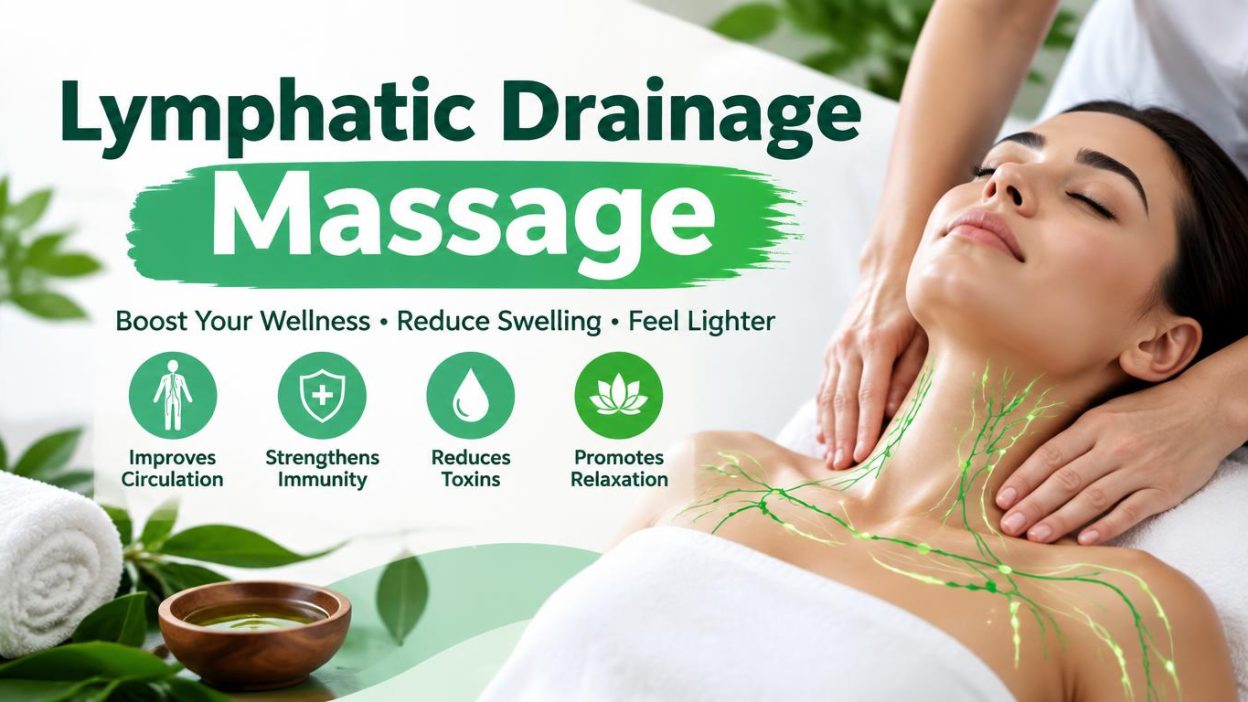
Lymphatic drainage massage, also called manual lymphatic drainage (MLD), is a very light type of massage. A trained therapist uses slow, rhythmic strokes on the skin. The goal is to encourage lymph to move along its natural paths.
Lymph is a clear fluid that carries waste products and immune cells around the body.
A Danish therapist named Emil Vodder developed the technique in the 1930s. Today, it’s used mostly to manage swelling, especially lymphedema. Many people also enjoy it as a calm, relaxing treat.
🌊 Meet Your Lymphatic System
Before we talk about massage, let’s meet the star of the show.
- 🧠 Your lymphatic system is a network of vessels, nodes, and organs. It helps balance body fluids and supports your immune system.
- 🚰 Small amounts of fluid leak out of your blood vessels into your tissues every day. Lymph vessels collect it and return it to your bloodstream.
- 🫧 Lymph nodes are small filters. You have hundreds of them, in places like your neck, armpits, and groin.
- ❤️ Blood has a heart to pump it. Lymph has no pump, so it relies on muscles, breathing, and movement.
- 🛡️ The spleen, tonsils, and thymus are part of the system too, and they help your immune defenses.
- 😄 Fun fact: your lymph system works all day and never asks for applause. Give it some credit.
🖐️ How Lymphatic Drainage Massage Works
The technique looks simple, but it follows a careful map.
- Therapists use very light pressure, because lymph vessels sit just under the skin. Pressing hard defeats the purpose.
- Strokes gently stretch the skin and release it, in slow, repeated patterns.
- Many therapists start near the neck and collarbone, then work outward to the arms, legs, or torso.
- The strokes follow the direction of lymph flow, guiding fluid toward healthy nodes.
- Oil is often skipped, since the hands need to grip and stretch the skin instead of gliding.
- The pace is slow. If it feels like a race, something’s off.
- It targets fluid, not tight muscles. It’s not the massage for stubborn knots.
🩺 Health Benefits of Lymphatic Drainage Massage: What Has Support
Here’s where the evidence is strongest, and where it’s still growing.
- 🦵 Lymphedema care: This is the best supported use. It’s usually part of a plan with compression, gentle exercise, and skin care.
- 🩹 Swelling after some surgeries: Some doctors and therapists recommend it during recovery. Always get medical approval first.
- 😌 Relaxation: Many people feel calm and sleepy afterward. That feeling is real, and it matters.
- 🩺 Lighter feeling in the limbs: Some people with mild fluid buildup say their legs or arms feel lighter. Research on this is limited.
- 🏃 Workout recovery: A few small studies have looked at it, with mixed results. It’s a nice extra, not a promise.
- 🧘 A pause in a busy day: Even a quiet hour to yourself counts as a wellness win.
🧂 Health Claims to Take With a Pinch of Salt
Wellness sites love big promises. Here’s your reality check.
- Detox: Your liver and kidneys handle waste. There’s no strong proof that this massage flushes out toxins.
- Weight loss: Any change you see is more likely fluid than fat. It isn’t a weight loss method.
- Cellulite: There’s no reliable proof it removes cellulite. Any smoothing tends to be short lived.
- Immune boost: Your lymphatic system supports immunity, but massage hasn’t been shown to keep you from getting sick.
- Bloating: Some people feel better afterward, but research is limited. Ongoing bloating deserves a doctor’s visit.
- Instant glow: You might look fresh for a little while. It’s not a cure for skin problems.
A good rule: if a claim sounds like a miracle, ask to see the study.
🦵 Swelling, Lymphedema, and Treatment Solutions
Lymphedema is long lasting swelling that happens when the lymph system can’t drain well. It can follow surgery, radiation, injury, or infection. Sometimes it runs in families.
- Symptoms: Look for swelling in an arm or leg, tight skin, a heavy feeling, less flexibility, or snug rings and sleeves.
- See a doctor first: Swelling has many causes, including heart, kidney, and vein problems. Get a diagnosis before you start any treatment.
- Think team effort: MLD is one player. Compression sleeves or bandages, movement, and skin care are the rest of the team.
- Protect your skin: Cuts and cracks can lead to infections in swollen limbs. Keeping skin clean and moisturized helps.
- Ask about other options: Your care team may suggest other treatment solutions, like compression garments or home devices.
- Stay consistent: Swelling care is a routine, not a one time treat.
🏥 Recovery After Surgery or Injury
Some swelling after surgery is normal. Some surgeons and therapists suggest gentle lymph work, but timing matters.
- Ask your surgeon first. Starting too early can cause problems.
- Find an experienced therapist. Look for someone who has worked with post surgery clients before.
- Know the usual suspects. Swelling is common after cosmetic surgery, joint surgery, and surgeries that remove lymph nodes.
- Follow your care plan. That may include compression garments, rest, and gentle movement.
- Watch for red flags. Fever, spreading redness, severe pain, or sudden swelling means you should call your doctor.
- Be patient. Healing keeps its own schedule, no matter how many pep talks you give it.
- Remember its role. Massage is a helper, not a replacement for medical care.
😴 Stress, Sleep, and Calm
Even when the medical benefits are modest, the calm can be real.
- Slow touch and a quiet room help many people relax.
- Deep breathing is often part of a session. It calms the body and helps lymph move, too.
- Some people sleep better that night. That’s not guaranteed, but it’s a nice bonus.
- Ongoing anxiety or low mood needs support from a health professional. Massage is a comfort, not a treatment for those.
- Turning off your phone for an hour is a wellness boost all by itself.
- If you doze off during your session, that’s not rude. It’s a five star review.
✨ Skin and Face
Facial lymph massage keeps popping up on social media feeds in 2026. Here’s the grounded version.
- Gentle strokes may ease morning puffiness for a short time. Results vary from person to person.
- Keep your touch light. Rubbing hard can irritate your skin.
- Start with clean hands and clean skin. A light cream helps your fingers glide at home.
- Skip it if you have a sunburn, a skin infection, or an active acne flare.
- Rollers and other tools are popular, but your hands work just fine.
- It’s no substitute for sunscreen, sleep, and water.
🪑 Desk Jobs, Flights, and Tired Legs
Sitting still is hard on fluid movement. Here’s how to help your legs feel better.
- Long hours of sitting can leave your feet and ankles puffy by evening.
- Stand up and walk for a few minutes every hour.
- Try ankle circles and calf raises at your desk. Your calf muscles act like a natural pump.
- Put your feet up for 10 to 15 minutes after a long day. Many people find it comforting.
- On flights, walk the aisle when it’s safe and drink water. Ask your doctor if compression socks make sense for you.
- Pain, warmth, or swelling in just one leg needs urgent medical care, because it can signal a blood clot.
- Your legs aren’t lazy. They’re just asking for a plot twist.
🚦 Who Should Ask a Doctor Before Trying Lymphatic Drainage Massage?
Gentle doesn’t mean it’s right for everyone. Talk to your doctor first if any of these apply to you:
- A blood clot, or a history of clots
- An active infection or a fever
- Heart failure or serious heart problems
- Kidney disease
- Active cancer or recent cancer treatment
- An open wound or skin infection in the area
- Pregnancy
- Sudden swelling, especially in one leg
In some cases the massage may need to change or wait. Your doctor is the right person to decide.
🛋️ What Happens During a Lymphatic Drainage Massage Session?
Wondering what your first visit looks like? Here’s the usual flow.
- A chat first: Your therapist asks about your health history, medicines, and goals.
- Easy setup: You lie down in comfortable clothes or under a drape.
- Time: Most sessions last 30 to 60 minutes.
- The touch: Strokes are light. You may feel a soft tug on your skin.
- No pain: If anything hurts, speak up right away.
- Afterward: Many people feel relaxed and sleepy. Some feel thirsty or need a bathroom break.
- Aftercare: Drink water, rest, take a gentle walk, and follow your therapist’s advice.
🧑⚕️ How to Choose a Good Therapist
Light touch, serious skill. Here’s what to look for.
- Ask about training in manual lymphatic drainage or lymphedema therapy, and about any certification.
- Ask about experience with your situation, whether that’s swelling, surgery recovery, or general relaxation.
- Check that they’re licensed to practice where you live.
- Bring notes from your doctor if you have a medical condition.
- Green flags: They ask good questions, use a gentle touch, and give honest expectations.
- Red flags: They promise to cure diseases, push big packages, use deep pressure, or dismiss your doctor.
- Trust your gut. You should feel comfortable and respected.
🏡 Gentle Habits You Can Do at Home
You don’t need a spa to support healthy fluid movement. These habits are simple and free.
- 🚶 Walk every day, even if it’s only around the block.
- 🌬️ Take five slow belly breaths. In through the nose, out through the mouth.
- 🤸 Stretch your neck, shoulders, and legs to keep muscles moving.
- 💧 Drink water through the day.
- 🦶 Put your feet up when you can.
- 🖐️ Try light, slow strokes with your hand, moving toward your heart, for about five minutes.
- 🧦 Wear cozy socks. It’s not medical advice, but it’s very good advice.
If you have lymphedema or any condition from the caution list, ask a therapist to show you the right technique before you try self massage. For more ideas, see our guide on [Internal link: simple daily wellness habits].
📲 Tips for Getting the Most From Your Lymphatic Drainage Massage
A little planning makes a session more useful and more relaxing.
- Check with your doctor first, especially if you have a health condition.
- Arrive comfortable. Drink water, skip a heavy meal, and wear loose clothes.
- Be honest about symptoms. Tell your therapist about swelling, pain, or anything unusual.
- Set realistic goals. Think comfort, calm, and swelling support, not miracles.
- Keep notes. Jot down how your swelling, sleep, and mood feel between sessions.
- Pair it with movement, sleep, and healthy habits. The massage works best as one part of a bigger plan.
- Share reliable info. If you post or chat about it, stick to facts. Your friends will thank you.
For trusted, plain language health info, visit https://www.cancer.gov, https://medlineplus.gov, or https://www.mayoclinic.org.
❓ FAQs About Lymphatic Drainage Massage
What is lymphatic drainage massage?
Lymphatic drainage massage is a gentle technique that uses light, slow strokes to encourage lymph fluid to move through the body. It’s often used for lymphedema and swelling under professional care. Many people also enjoy it for relaxation.
Why do people love lymphatic drainage massage?
It’s calm, gentle, and leaves many people feeling lighter and more relaxed. It also has a good reputation in swelling care, and it’s popular on social media. People love that it feels like a treat that might also be good for them.
Does lymphatic drainage massage really work?
It has good support for helping manage lymphedema as part of a full care plan. For bloating, detox, weight loss, and skin, the evidence is much weaker. Relaxation is the benefit people mention most often.
🎉 Final Thoughts: Keep Calm and Let It Flow
Lymphatic drainage massage can be a gentle, soothing part of a wellness routine, and a helpful tool for swelling when guided by a professional. Just keep your expectations honest and your health questions with real experts.
Did anything in this guide surprise you? Share your thoughts in the comments, pass this post to a friend who needs it, and subscribe for more friendly wellness reads. Here’s to a lighter, calmer, better flowing week with lymphatic drainage massage on your radar.