

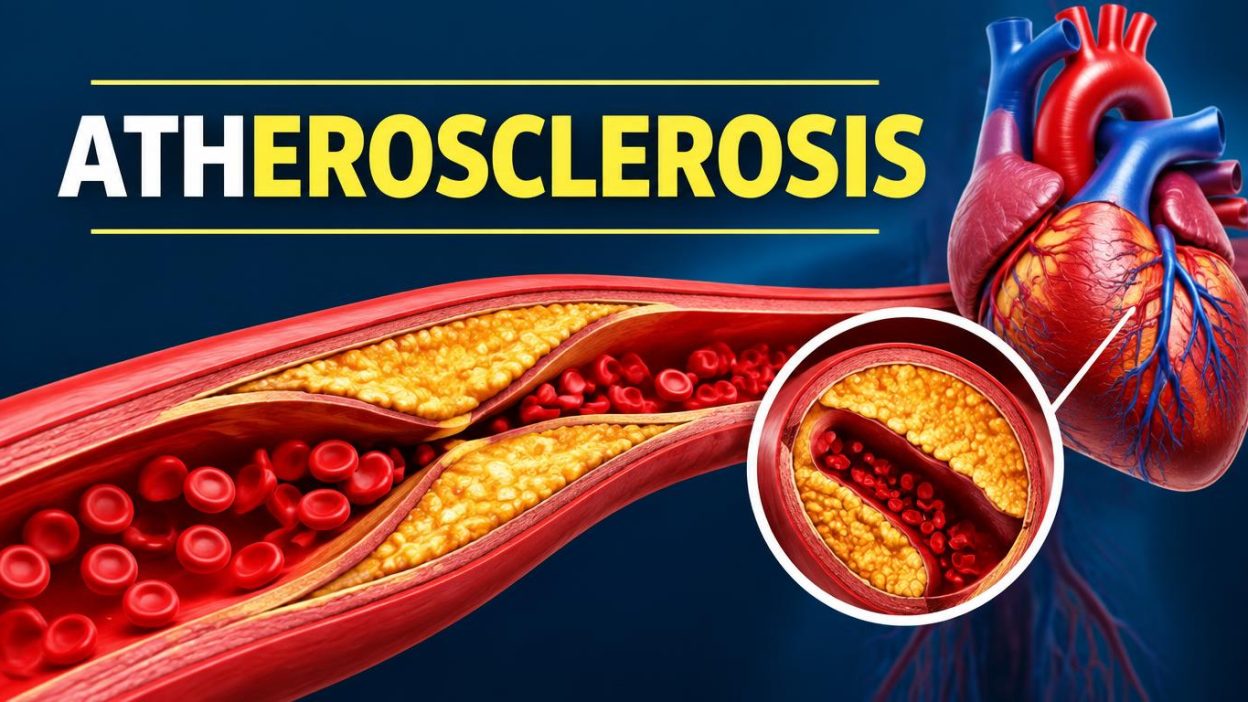
Atherosclerosis sounds like something from a spelling bee. Sound it out slowly, one chunk at a time, and it gets easier. The idea behind it is much simpler than the name: plaque slowly builds up inside your arteries, and those blood vessels get narrower and stiffer.
It’s common, and it can be serious. Still, plenty of the fixes are everyday stuff, like walking, sleeping, and eating a little better.
This guide covers what atherosclerosis is, how it starts, which signs to watch for, and how doctors treat it. You’ll also pick up small habits you can start today. It’s general information, not medical advice, so your own doctor always has the final say.
🫀 What Is Atherosclerosis, Really?
Your arteries carry blood from your heart out to the rest of your body. With atherosclerosis, plaque collects on the inside walls of those arteries. Plaque is a mix of cholesterol, fat, calcium, and a few other bits.
Over the years, the walls thicken and lose their bounce. Blood has less room to squeeze through. Your heart, brain, legs, or kidneys may not get all the blood they need.
The name comes from two Greek words. “Athero” means paste, and “sclerosis” means hardening. Paste plus hardening. Not exactly a spa menu item.
You may also see the word arteriosclerosis. That’s the broad label for stiff arteries. Atherosclerosis is the most common kind.
🛣️ How Atherosclerosis Builds Up
Picture the pipes under your kitchen sink. Grease and gunk stick to the walls a little at a time. Nobody notices until the water starts draining slowly.
Arteries are a bit like that, though the real story is more complicated. It usually goes something like this.
First, something irritates the inner lining of an artery. High blood pressure, smoking, high blood sugar, and too much LDL cholesterol are the usual suspects.
Next, cholesterol slips into the damaged spot. Your immune cells rush over to clean up, and many get stuck in the mess.
Over time, a lump of plaque grows and may harden with calcium. The artery narrows.
Now and then, a plaque cracks open. Your body treats it like a cut and forms a clot. That clot can block the artery fast.
The whole process usually takes decades. It can begin quietly in young adulthood, or even earlier.
🤫 Why Atherosclerosis Often Stays Quiet
Here’s the annoying part. Early atherosclerosis rarely causes symptoms. You can feel perfectly fine while plaque grows in the background.
Most people don’t notice anything until an artery is quite narrow, or a clot suddenly blocks it. That’s why a routine checkup is worth your time, even when you feel great.
A simple visit can turn up high blood pressure, high cholesterol, or high blood sugar. Those numbers are early clues, and they show up long before any chest pain does.
Think of it like testing a smoke alarm. You hope it never goes off. You’re glad to know it works.
🩺 Atherosclerosis Symptoms: What to Watch For
Symptoms depend on which arteries are narrowed. So they can look very different from person to person.
🫀 Heart arteries. You may feel chest pain or pressure, called angina. Shortness of breath and unusual tiredness are common too, especially when you’re active.
🧠 Neck and brain arteries. Sudden weakness, numbness, trouble speaking, vision changes, or dizziness can be warning signs of a mini stroke or a stroke.
🦵 Leg arteries. Cramping in the calves or thighs when you walk, which eases when you rest, is a classic sign. Cold feet and sores that heal slowly can also point to it. Doctors call this peripheral artery disease.
🩸 Kidney arteries. Blood pressure that’s hard to control, or kidneys that slowly work less well, can be clues.
Plenty of these symptoms have other causes. Don’t panic if you tick one box. But if something is new, strange, or getting worse, book a visit and get it checked.
⚠️ What Raises Your Risk of Atherosclerosis
Atherosclerosis doesn’t have one single cause. Think of it as a pile of small things that add up over the years.
Some risk factors you can’t change. Age is one, since arteries naturally wear a little with time. Family history is another, especially early heart disease in close relatives. Some people also inherit cholesterol conditions.
Others are more in your hands. High LDL cholesterol, high blood pressure, smoking, and diabetes top the list. Carrying extra weight, sitting most of the day, and eating lots of salt, sugar, and highly processed food add to the load. Poor sleep matters too, including sleep apnea that never got diagnosed.
Having a few of these doesn’t mean you’ll get atherosclerosis. It just means it pays to start looking after your arteries early. And every small change counts.
🚨 What Can Happen if Atherosclerosis Goes Untreated
When an artery narrows a lot, or a clot blocks it, the organs it feeds run short on blood. That can lead to a heart attack or a stroke. It can also cause peripheral artery disease in the legs, an aneurysm (a weak, bulging spot in an artery wall), or long term kidney damage.
That list sounds scary. Fair enough. But here’s the hopeful side: many of these problems can be delayed or prevented when atherosclerosis is found early and managed well.
So don’t skip the boring stuff, like checkups and blood tests. They’re doing more work than you think.
🔍 How Doctors Check for Atherosclerosis
Your doctor starts by asking about your symptoms, your family, and your habits. Then they’ll usually pick a few tests. Here are the common ones.
- A physical exam, including your pulse and blood pressure
- Blood tests for cholesterol and blood sugar
- An ECG, which records your heart’s electrical activity
- A stress test, where your heart is watched during exercise
- An ultrasound to look at blood flow in neck or leg arteries
- An ankle brachial index, which compares blood pressure in your ankle and arm
- A CT scan, which can measure calcium in heart arteries
- An angiogram, which uses dye and special images to spot blockages
Most of these are quick and painless. If you’re not sure why you need one, ask. Doctors are used to that question.
💪 Treatment Solutions for Atherosclerosis, Starting With Habits
Almost every treatment plan for atherosclerosis begins with daily habits. They help your blood pressure, your cholesterol, your weight, and your mood all at once. That’s a lot of bang for very little cost.
If you smoke, quitting is often the biggest single step you can take. It’s hard, and it’s worth asking your doctor about support. Plenty of people need a few tries.
Eating better, moving more, and sleeping enough come next, and we’ll cover each below. If you’re carrying extra weight, even losing a modest amount can help.
Keep an eye on your blood pressure, cholesterol, and blood sugar, and go to your follow up visits. Small changes to your plan now can spare you bigger problems later.
You don’t need to overhaul your whole life by Friday. Pick one habit. Make it stick. Then add another.
💊 Medicines and Procedures for Atherosclerosis
Sometimes habits aren’t enough on their own. That’s very common, and it doesn’t mean you did anything wrong.
Doctors often prescribe medicines to lower cholesterol, like statins, and to bring down blood pressure. If you have diabetes, keeping blood sugar in range matters a lot. Some people take a medicine such as aspirin to help prevent clots, but only when a doctor says so.
If an artery is badly narrowed, a procedure may help. In angioplasty, a tiny balloon opens the artery, and a small mesh tube called a stent keeps it open. In bypass surgery, a surgeon builds a new route for blood around the blockage. There’s also a surgery that cleans plaque from a neck artery, and there are similar treatments for the legs.
Whatever you’re prescribed, don’t start or stop a medicine on your own. Ask your doctor what it does, what side effects to expect, and how long you’ll need it.
🥗 Eating Well With Atherosclerosis in Mind
Let’s clear something up first. No single food fixes atherosclerosis. What matters is your everyday pattern.
Doctors often point to Mediterranean style and DASH style eating. Both lean on plants, and both are easy to adjust to your own tastes.
So fill your plate with vegetables and fruit in lots of colors. Choose whole grains like oats and brown rice. Add beans, lentils, nuts, and seeds. Eat fish and lean protein, and cook with olive oil or other plant oils.
Then ease up on the things that work against you. That means salt, sugary drinks, fried food, highly processed snacks, and trans fats. Fatty meats and butter are fine now and then, but they shouldn’t be the main event.
Fiber deserves a shout out. Oats and beans can help bring cholesterol down. And cooking at home lets you decide how much salt goes into the pot.
🚶 Getting Moving Without Overthinking It
Your arteries like it when you move. So do your heart, your weight, your sleep, and your mood.
Most adults are told to aim for about 150 minutes of moderate activity a week. That works out to 30 minutes on five days. Brisk walking counts. So do cycling, swimming, and dancing in your kitchen.
Try adding a bit of strength training twice a week. And if you sit for hours, stand up and stroll around every so often. Even a few minutes helps.
Start small, and add five minutes at a time. The best exercise is the one you’ll keep doing.
If walking brings on leg pain, tell your doctor. Supervised exercise programs can help a lot. And if you have chest pain, a heart condition, or other worries, check with your doctor before you begin something new.
😴 Sleep, Stress, and Little Everyday Things
Wellness isn’t only about plates and treadmills. The small stuff in your daily routine matters too.
Most adults do best with 7 to 9 hours of sleep. If you snore loudly or wake up tired, ask about sleep apnea. It’s common, and it’s treatable.
Stress is trickier. It doesn’t directly build plaque, but it can make healthy habits harder to keep. Slow breathing, a walk, a hobby, or a good chat with a friend can take the edge off.
In 2026, home blood pressure monitors and fitness trackers are everywhere. If you have one, write down your numbers and bring them along to appointments. Your doctor will appreciate it.
And if you take daily medicine, link it to something you already do, like brushing your teeth. Habits stick better when they hitch a ride.
🧩 Atherosclerosis Myths, Busted
There’s a lot of half true advice floating around. Let’s sort some of it out.
“Only older people get it.” Age is a risk factor, but atherosclerosis can start early and grow quietly for years. Younger adults can have early buildup too.
“No symptoms means my arteries are fine.” Not necessarily. Atherosclerosis is often silent, and blood tests can find warning signs long before you feel anything.
“Only people who are overweight get it.” Nope. People of every size can have high cholesterol or high blood pressure.
“A supplement will clear my arteries.” No supplement has been proven to wipe out plaque. Healthy habits and medicine that your doctor picks for you are the reliable route.
“Chest pain is the only warning.” Symptoms can show up in the legs, brain, or kidneys too. Some people, including many women and people with diabetes, have milder or unusual signs.
🚑 Signs You Shouldn’t Wait On
Some symptoms need help right now. Call your local emergency number if you or someone near you has any of these.
- Chest pain, pressure, or tightness, especially with shortness of breath, sweating, nausea, or pain spreading to the arm, jaw, or back
- Sudden weakness or numbness on one side of the body
- A drooping face or slurred speech
- Sudden vision loss or a sudden, severe headache
- Sudden pain, coldness, or color change in a leg or arm
For a stroke, remember FAST. Face drooping. Arm weakness. Speech trouble. Time to call for help.
Don’t drive yourself, and don’t wait it out. Quick care can protect your heart and brain.
📣 Sharing This Atherosclerosis Guide With People You Care About
Good information is most useful when someone actually uses it. Here are a few easy ways to put this guide to work.
Send it to a family member, especially if heart disease runs in your family. A friendly chat over dinner goes down easier than a lecture.
Before your next appointment, jot down your questions, your symptoms, and any home blood pressure numbers. You’ll get more out of the visit.
Turn the habits above into a simple weekly checklist. Two walks, three home cooked meals, and lights out by 11. That kind of thing.
If you post about it online, keep it kind and stick to facts. Laugh about everyday habits if you like, but don’t joke about anyone’s illness.
For more reliable, plain language health information, visit https://www.nhlbi.nih.gov, https://www.heart.org, https://medlineplus.gov, or https://www.mayoclinic.org.
Want more everyday wellness tips? See [Internal link: simple daily wellness habits] and [Internal link: healthy eating basics].
❓ FAQs About Atherosclerosis
What is atherosclerosis?
Atherosclerosis is a condition where plaque made of cholesterol, fat, and calcium builds up inside the arteries. It narrows and stiffens them, which can cut blood flow to the heart, brain, and other organs. It often develops slowly and without early symptoms.
Can atherosclerosis be reversed?
Plaque that’s already there usually doesn’t vanish completely. But healthy habits and medicines can slow its growth and make it more stable. In some people, they can shrink it a little. Your doctor can tell you what to expect in your case.
What is the best way to prevent atherosclerosis?
Don’t smoke, eat a heart healthy diet, stay active, keep a healthy weight, and sleep well. Keep blood pressure, cholesterol, and blood sugar in check, and go to regular checkups. Starting early is best, but starting today still counts.
🎉 Final Thoughts: Small Steps for Healthy Arteries
Atherosclerosis is serious, but you’re not helpless. A walk today, a few more vegetables, a decent night’s sleep, and an honest chat with your doctor all add up over time.
Did anything in this guide about atherosclerosis surprise you? Tell us in the comments, share it with someone you care about, and subscribe for more friendly health reads. Here’s to happy arteries!


