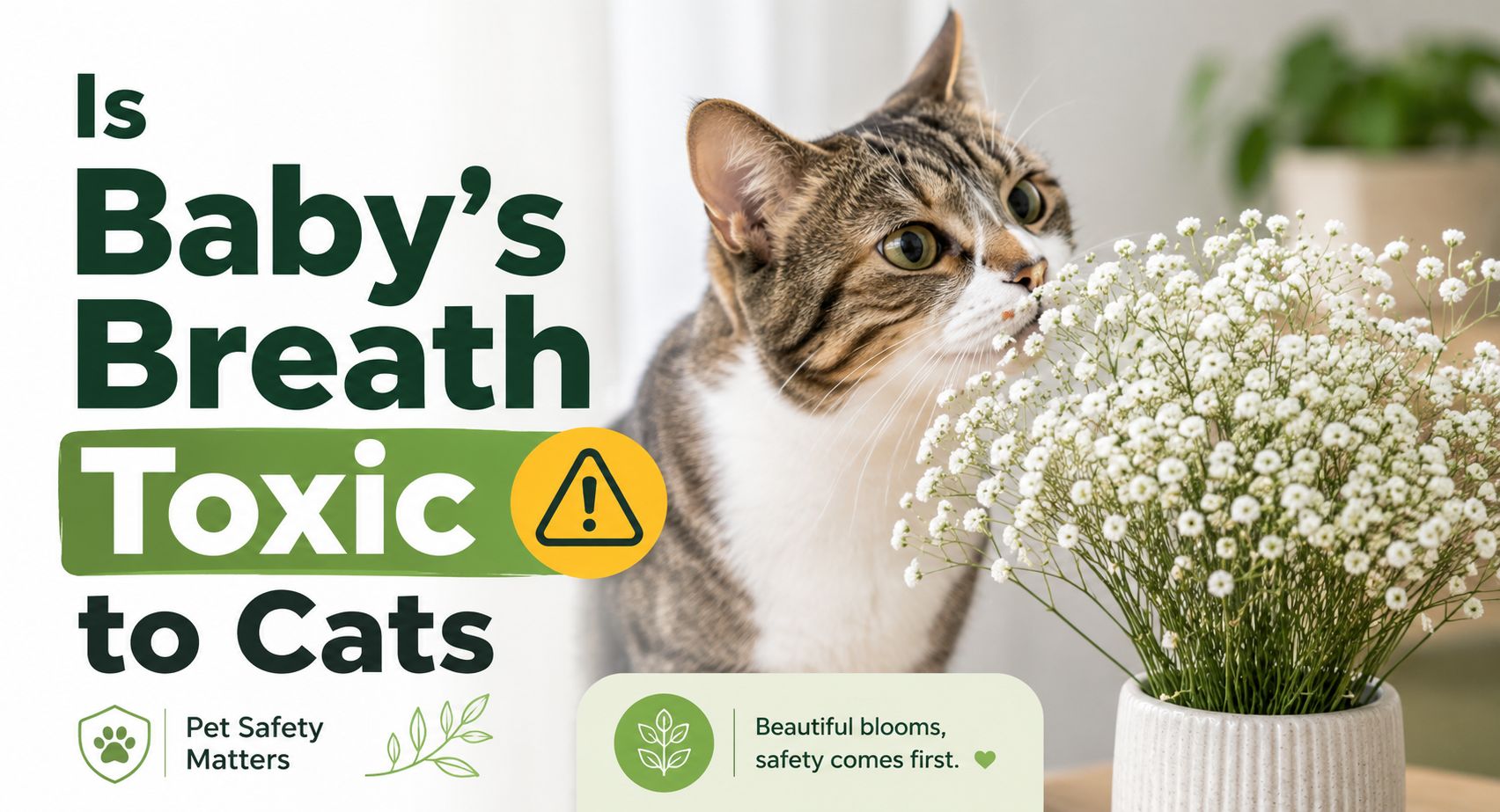
If you’ve ever brought home a bouquet of roses wrapped in those delicate white sprigs, you’ve probably wondered: is baby’s breath toxic to cats? It’s a fair question, especially if you share your home with a curious feline who treats every fresh flower delivery as a personal salad bar.
The short answer is yes — baby’s breath is considered mildly toxic to cats, though it’s rarely a medical emergency. Below, we’ll break down exactly what happens if your cat nibbles on this popular filler flower, what symptoms to watch for, and how to keep your feline safe without giving up your favorite floral arrangements entirely.
Is Baby’s Breath Toxic to Cats? The Short Answer
Veterinary resources generally agree: baby’s breath (Gypsophila) can cause mild gastrointestinal upset in cats if chewed or swallowed. The plant contains natural soap-like compounds called saponins — specifically one known as gyposenin — which irritate the lining of a cat’s mouth, throat, and digestive tract.
It’s worth noting there’s some inconsistency across sources on this exact point. The ASPCA’s own plant database lists baby’s breath under “non-toxic” plants for cats, dogs, and horses, yet the same entry describes clinical signs of vomiting and diarrhea if ingested. Most practicing veterinarians and pet health sites describe it as “mildly toxic” rather than fully non-toxic, given that ingestion reliably triggers stomach upset. In practical terms, this means baby’s breath sits in a gray area: not dangerous enough to panic over, but not something your cat should be snacking on regularly either.
Are Baby’s Breath Toxic to Cats or Just Mildly Irritating?
This is where a lot of pet owners get confused. “Toxic” sounds alarming, but toxicity exists on a spectrum. Truly dangerous plants for cats — like lilies, which can cause fatal kidney failure — are in a completely different category than baby’s breath.
So are baby’s breath toxic to cats in a life-threatening sense? Not typically. The toxicity here is classified as mild, meaning it irritates the digestive system rather than damaging organs. Most cats who nibble a stem or two will experience temporary discomfort and recover fully within a day, often without any veterinary intervention at all.
Is Gypsophila Toxic to Cats? Understanding the Science
Baby’s breath belongs to the genus Gypsophila, part of the Caryophyllaceae (carnation) family. So when people ask “is gypsophila toxic to cats,” they’re really asking the same question in botanical terms.
The plant’s saponin content is concentrated mainly in the flowers, though the stems and leaves can also cause irritation if chewed. Saponins work by disrupting cell membranes along the digestive tract, which is why the primary symptoms are gastrointestinal rather than neurological or cardiac. This is a key distinction from more dangerous ornamental plants, whose toxins can affect the heart, kidneys, or nervous system.
Why Cats Are Attracted to Baby’s Breath in the First Place
Cats aren’t drawn to baby’s breath by accident. The tiny white blooms release a subtle, sweet fragrance that many cats find appealing, and the wispy texture makes it fun to bat around or chew — similar to grass. Cats also instinctively nibble on plant material to aid digestion, which means a bouquet sitting on your coffee table can look like an invitation rather than a decoration.
Can Cats Eat Baby’s Breath Safely?
Can cats eat baby’s breath without any consequences at all? Generally, no — even small amounts can cause mild stomach upset in sensitive cats, though the amount matters. A single bite or brief chew is unlikely to cause more than minor drooling or a bit of nausea. Larger quantities, on the other hand, increase the risk of vomiting, diarrhea, and dehydration.
Smaller cats, kittens, senior cats, and those with pre-existing health conditions are more vulnerable to noticeable symptoms, since it takes less plant material to affect their system. If you have a multi-cat household or a particularly food-motivated cat, it’s safest to assume baby’s breath is off-limits rather than testing the waters.
Symptoms of Baby’s Breath Poisoning in Cats
If your cat has gotten into a floral arrangement, here’s what to watch for over the following few hours:
- Drooling or excessive salivation
- Vomiting
- Diarrhea
- Loss of appetite
- Lethargy or reduced activity
- Mild skin irritation if the plant sap contacted their fur or paws
These symptoms typically appear within a few hours of ingestion and resolve within 24 hours as the plant material clears the cat’s system. Persistent vomiting, visible weakness, or symptoms lasting longer than a day warrant a call to your veterinarian.
Are Cats Allergic to Baby’s Breath?
It’s worth distinguishing toxicity from allergy. Are cats allergic to baby’s breath in the traditional sense? Not usually — the reaction most cats have is a direct irritant response to saponins, not an immune-mediated allergic reaction. That said, some cats may develop contact irritation on their skin or paws after handling the plant, particularly if they have sensitive skin. If you notice redness, itching, or swelling after contact (rather than ingestion), it’s reasonable to treat this as an individual sensitivity and keep the plant away from that cat going forward.
Is Baby’s Breath Safe for Cats in Small Amounts?
Many cat owners want a practical answer rather than a black-and-white rule. So, is baby’s breath safe for cats if they only get a small taste? In most cases, a brief nibble won’t cause serious harm — you might notice nothing at all, or just mild drooling. However, “safe” is relative. Because baby’s breath contains an active irritant compound, there’s no guaranteed safe dose, and individual cats react differently based on size, sensitivity, and overall health. The most reliable approach is to treat baby’s breath as unsafe for unsupervised access, even if occasional small exposure rarely causes lasting harm.
Baby’s Breath Flowers Toxic to Cats: What to Do If Your Cat Eats Some
If you catch your cat chewing on or swallowing part of a bouquet containing baby’s breath flowers toxic to cats, here’s a simple action plan:
- Remove remaining plant material from your cat’s reach immediately.
- Check your cat’s mouth gently for any visible plant fragments and rinse with cool water if accessible and safe to do so.
- Offer fresh water to help dilute any irritants and support hydration.
- Monitor closely for the next 12–24 hours, watching for vomiting, diarrhea, or lethargy.
- Call your veterinarian or an animal poison control hotline if symptoms are severe, persistent, or your cat has an existing health condition.
Keeping a note of how much your cat ingested and when can help your vet assess the situation faster if you do need to call.
Is Baby’s Breath Poisonous to Cats? When to See a Vet
While most cases resolve on their own, is baby’s breath poisonous to cats enough to require emergency care? Rarely — but certain situations do call for professional attention:
- Vomiting or diarrhea that continues beyond 24 hours
- Signs of dehydration (sunken eyes, dry gums, lethargy)
- A kitten, senior cat, or cat with a chronic illness has ingested a large amount
- Your cat shows unusual weakness, difficulty breathing, or refuses water entirely
Veterinary treatment for baby’s breath ingestion is typically supportive — think fluids, anti-nausea medication, and monitoring — rather than intensive intervention. It’s a reassuring contrast to genuinely dangerous plants like lilies or sago palms, where rapid organ damage is a real risk.
Cat-Safe Alternatives to Baby’s Breath
If you love the airy, delicate look baby’s breath brings to floral arrangements but want to keep your home cat-safe, consider these non-toxic substitutes recommended by pet-safety resources:
- Statice – offers a similar filler texture with small clustered blooms
- Wax flower – delicate and long-lasting in arrangements
- Alstroemeria (Peruvian lily) – despite the name, it’s not a true lily and is considered pet-safe
- Orchids – elegant and non-toxic to cats
- Snapdragons – colorful, cat-friendly, and widely available
Swapping in these alternatives lets you keep beautiful bouquets around the house without constantly policing your cat’s curiosity.
Frequently Asked Questions
Is baby’s breath toxic to cats in small doses? A small nibble is unlikely to cause serious harm, but it can still trigger mild drooling or nausea in sensitive cats. There’s no truly “safe” amount, so supervision is your best defense.
Is gypsophila toxic to cats and dogs equally? Yes, both cats and dogs can experience similar mild gastrointestinal symptoms from Gypsophila ingestion, and the same saponin compound is responsible in each case.
Can cats eat baby’s breath without getting sick? It’s possible for a cat to chew on the plant without visible symptoms, but this varies by cat and by the amount consumed. It’s not a risk worth relying on intentionally.
How long do symptoms last if a cat eats baby’s breath? Most cats recover within 24 hours as their body clears the plant material naturally, with symptoms like vomiting and diarrhea resolving on their own.
Should I remove baby’s breath from my home if I have a cat? If your cat has a history of chewing on plants or flower arrangements, it’s a reasonable precaution to keep baby’s breath out of reach or choose a pet-safe alternative instead.
Final Thoughts
So, is baby’s breath toxic to cats? Yes — mildly. It’s not the kind of plant that requires an emergency vet trip in most cases, but it’s also not something to leave within easy reach of a curious cat. Understanding the difference between mild plant toxicity and truly dangerous plants like lilies can help you make informed decisions about what flowers to bring into a cat-friendly home. When in doubt, supervise your cat around fresh arrangements, know the early symptoms of gastrointestinal upset, and keep your veterinarian’s number handy just in case.