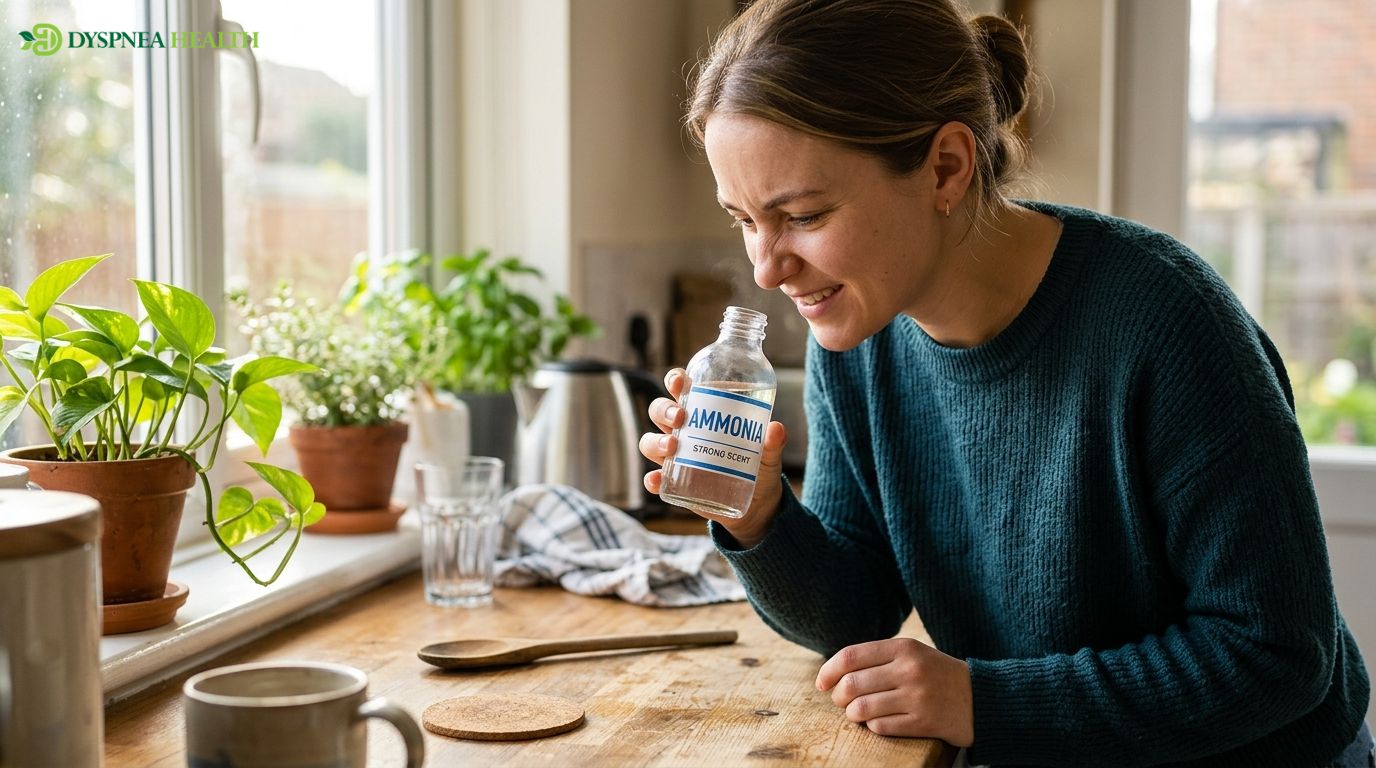
Have you ever heard someone mention “That smells like ammonia?” and been confused as to what exactly was meant? Ammonia has one of those distinctive smells that’s hard to ignore once noticed; its scent is both harsh and potency.
Ammonia can be described as an unpleasant combination of strong chemical smells like urine, strong cleaning products or rotting fish odor. While that might not sound pleasant at first, your nose often reacts quickly as ammonia irritates eyes, throat and nasal passages even at low concentration levels.
This guide teaches you everything there is to know about ammonia smell, from its source, how and why it takes its signature odor, where to detect it, to potential health concerns caused by ammonia exposure. Our information comes directly from credible scientific and medical sources – not from internet myths!
What Is Ammonia?
Ammonia (NH3) is an ammonia chemical compound composed of nitrogen and hydrogen. Scientists use the symbol “NH3” when writing its name.
Ammonia can be found both naturally in the environment and as part of many industrial and household products. Farmers use ammonia in fertilizers; factories utilize its cooling systems; while cleaning products often include dilute ammonia for its ability to cut through grease efficiently.
According to the Centers for Disease Control and Prevention (CDC), ammonia is a colorless gas with a strong and irritating odor. (CDC)
That smell acts like a built-in warning system. Your body notices it quickly because ammonia can become harmful at higher concentrations.
How Does Ammonia Smell
Simply stated: ammonia smells strongly chemical.
People frequently compare it to:
* Cat Urine* Proactive Cleaning Solutions * Rotting Fish * Sweat Left in Gym Clothes Overly Concentrated Public Restroom Odor
Smelling this substance can immediately make your nose run hot; some describe its fragrance as being burning when inhaled; meanwhile others describe it as being sour, bitter or even suffocating.
Ammonia doesn’t smell the same to everyone; humans’ sense of smell differ from one person to the next, with some noting more urine-like qualities while others detect chemical or fishy aromas.
The Centers for Disease Control and Prevention has reported that ammonia can smell similar to decayed fish. ([CDC][1])
Experts from NIOSH describe it as being both “pungent” and suffocating ([CDC][2])
That combination explains why most people do not associate ammonia with pleasant scents like lavender. Nobody walks into an ammonia-filled room and thinks, “Ah yes, lavender!”
Why Does Ammonia Smell So Strong?
Ammonia dissolves quickly when exposed to moisture, so when inhaled it quickly reacts when inhaled into moist tissues like your nose, eyes, and throat.
That irritates sensitive tissue and results in the burning sensation experienced by many.
Scientists also explain that humans can detect ammonia at very low concentrations, according to research published by the National Center for Biotechnology Information. Their study reports that people may detect ammonia between 5 and 53 parts per million. (NCBI][3])
Simply put, your nose detects ammonia before concentrations become dangerously high – an essential feature that helps protect people from harmful exposure.
Still, prolonged exposure may overwhelm your senses and limit your ability to smell effectively ([CDC][4])
Common Places Where You Might Smell Ammonia
Ammonia odors appear in more places than most people realize.
1. Household Cleaning Products
Many glass and surface cleaners include ammonia as it quickly removes grease without leaving streaks behind.
Have you ever cleaned a bathroom and thought, “Wow, this smells intensely clean?” Chances are ammonia was involved.
Be wary when mixing ammonia cleaners with bleach cleaners; according to the Centers for Disease Control (CDC), doing so could release harmful gases. ([CDC]
2. Cat Urine
Cat urine contains compounds that break down into ammonia over time, creating an offensive scent in older litter boxes.
Pet owners usually recognize their pet’s scent immediately. Their guests might also detect it even when trying to maintain polite behavior.
3. Spoiled Food
Food that has gone bad may produce an ammonia smell when it begins to spoil.
Fresh seafood should have a mild, fresh scent. A strong ammonia odor could indicate bacteria breakdown and spoilage of your meal.
4. Farms and Fertilizers
Agriculture areas frequently produce ammonia smells due to fertilizers and animal waste releasing ammonia gas into the environment.
Farmyard-like smells often result from ammonia compounds.
5. Refrigeration Systems
Industrial refrigeration systems often rely on ammonia as a coolant, while food processing plants and ice plants often utilize its effects as well.
Leaks create an obvious smell, making their presence immediately noticeable to workers.
Is Smelling Ammonia Dangerous?
Household cleaners that emit faint ammonia scents usually do not pose serious threats if there is sufficient ventilation in the area in which it occurs.
However, exposure to ammonia in excess can become potentially hazardous.
The Centers for Disease Control and Prevention (CDC) reports that exposure to higher levels can irritate or burn eyes, skin, nose, throat, lungs, as well as cause breathing difficulties and lung damage. ([CDC][1])
Warning signs for ammonia exposure include: * Burning eyes Coughing Chest tightness Its Difficult breathing
Severe throat irritation Headaches
If ammonia smells overpoweringly strong in an area, leave immediately and get fresh air.
Nose tests should not become a barometer of one’s toughness; science does not offer medals for bravery.
Why Does Urine Sometimes Smell Like Ammonia?
Many first become aware of ammonia through urine odors.
Urine naturally contains urea, which bacteria break down into ammonia over time and make more potent than fresh urine odor. That explains why aged urine smells stronger.
Numerous factors can exacerbate an ammonia-like urine odor:
At first glance, an ammonia smell in urine does not always indicate an urgent or serious medical concern; however, persistent or unusual changes should always be evaluated by medical personnel. A strong ammonia odor could signal dehydration, urinary tract infection, high-protein diets or certain medications as possible causes. When present for extended periods, persistent changes should always seek medical advice immediately.
Can Humans Become “Nose Blind” to Ammonia?
Yes, and that can cause issues.
The Centers for Disease Control and Prevention (CDC) and NIOSH both point out that prolonged ammonia exposure may diminish one’s ability to detect its smell ([CDC][1]).
This phenomenon, commonly referred to as “olfactory fatigue,” happens as our noses become less sensitive over time due to continuous exposure.
Industrial workers receive training for this reason; they cannot rely solely on smell to detect potentially hazardous leaks.
What Makes Ammonia Different From Other Chemical Smells?
People often confuse ammonia with bleach, chlorine, or strong disinfectants. While these odors may seem similar, they differ chemically.
Ammonia smells:
- Sharper
- More alkaline
- More urine-like
- Less “pool-like” than chlorine
Chlorine usually reminds people of swimming pools. Ammonia smells more aggressive and dry.
Interestingly, mixing bleach and ammonia creates toxic chloramine gases. That combination can seriously damage the lungs. (CDC)
So if your cleaning routine sounds like a chemistry experiment, it may be time to simplify it.
How to Get Rid of Ammonia Smells
Removing ammonia odor depends on the source.
For Household Smells
- Open windows
- Use fans for ventilation
- Clean surfaces thoroughly
- Avoid mixing chemicals
For Cat Urine
- Use enzyme cleaners
- Wash fabrics quickly
- Replace heavily contaminated materials if needed
For Refrigerators or Food
- Throw away spoiled items
- Clean surfaces with mild soap and water
- Check for hidden leaks or spills
Ventilation matters most. Fresh air helps dilute ammonia gas quickly.
When Should You Worry About an Ammonia Smell?
You should take ammonia smells seriously if:
- The odor suddenly appears indoors
- Your eyes or throat burn
- Multiple people notice irritation
- You suspect a chemical leak
- The smell feels overpowering
Industrial ammonia leaks require emergency attention because high concentrations can become life-threatening.
If symptoms develop, contact emergency services or poison control immediately.
Final Thoughts
Ammonia’s sharp, pungent smell can be intensely unpleasant; many liken its fragrance to strong urine, harsh cleaners or rotting fish. Once recognized, its presence often stays with us long after.
Your body uses smell as a warning system that something might irritate or harm it.
Ammonia can be found in everyday products and environments in small amounts; however, larger concentrations require immediate precaution.
Understanding smell can help you quickly identify spoiled food, chemical exposures, cleaning hazards and health concerns more quickly.
And if a room smells of ammonia so intensely that it causes your eyes to water, trust your instincts – your nose was designed for survival, not dramatic special effects.
Sources
- Centers for Disease Control and Prevention (CDC) – Ammonia Chemical Fact Sheet (CDC)
- National Institute for Occupational Safety and Health (NIOSH) – Ammonia Overview (CDC Archive)
- NCBI Bookshelf – Acute Exposure Guideline Levels for Ammonia (NCBI)