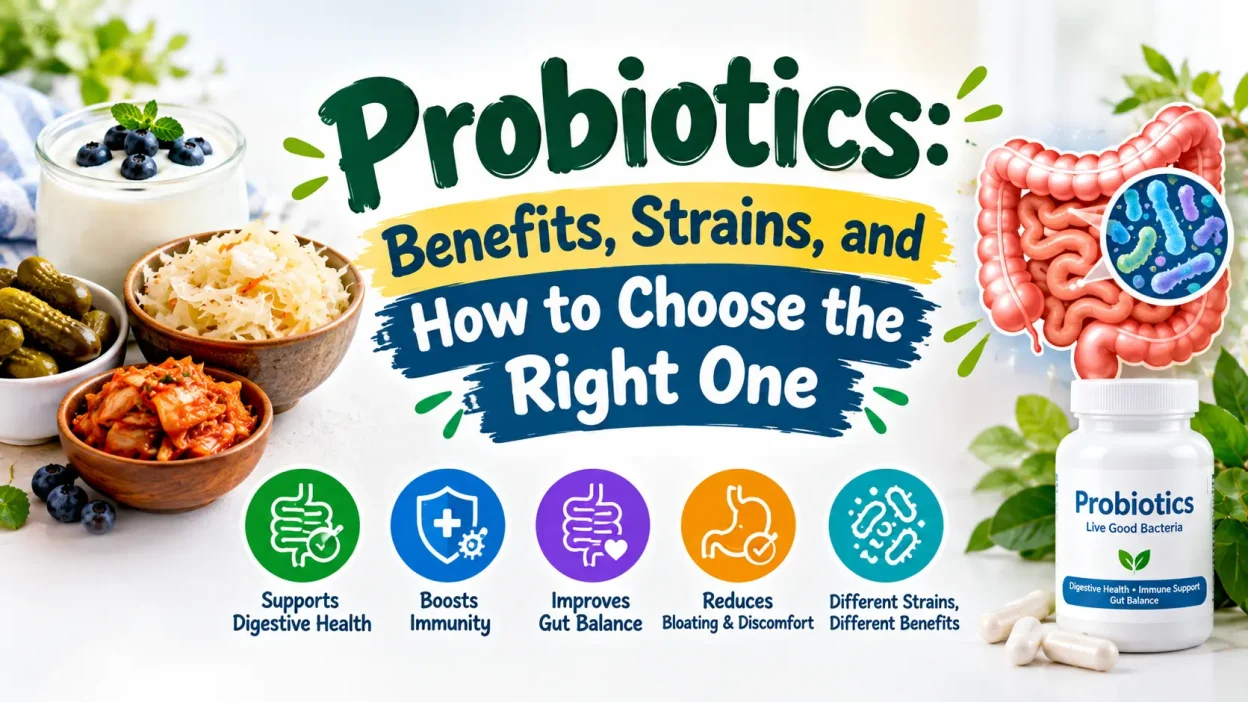
Your gut holds around 100 trillion microorganisms. Most are helpful. Some aren’t. The balance between them affects digestion, immunity, and a lot more.
Probiotics are the helpful ones. But the aisle is confusing. Labels promise the world. Research says some of it’s true. Some isn’t.
This guide keeps it simple. What probiotics are. Which strains actually have evidence. How to pick one. When to be careful.
What Are Probiotics?
Probiotics are live bacteria and yeasts that help your body when you take enough of them.
They’re named in three parts — genus, species, strain. Take Lacticaseibacillus rhamnosus GG. Genus is Lacticaseibacillus. Species is rhamnosus. Strain is GG.
The strain matters more than anything else on the label. Different strains do different things. Lactobacillus might help with diarrhea. Saccharomyces boulardii might help with antibiotic side effects. They aren’t swappable.
Common types you’ll see:
- Lactobacillus
- Bifidobacterium
- Saccharomyces boulardii (a yeast)
- Bacillus
- Enterococcus
What Probiotics Actually Do
The evidence is real but narrower than the marketing.
Digestion
Some strains may help with:
- Antibiotic-associated diarrhea
- Infectious diarrhea in kids
- IBS symptoms
Gut barrier and immunity
Probiotics help strengthen the gut lining. They support nutrient absorption. They may crowd out harmful microbes.
Other areas being studied
- Eczema prevention in infants
- Oral health
- Some allergies
Honest note: the NHS says evidence is thin for many claims. The science is promising, not settled.
Probiotics vs. Prebiotics
Quick way to keep them straight:
- Probiotics — the live bacteria
- Prebiotics — the fiber that feeds them
Prebiotics are fibers your body can’t digest. They ferment in your colon and feed the good bacteria.
Foods with prebiotics:
- Green bananas
- Asparagus
- Onions
- Garlic
- Oats
- Beans
Together, they’re called synbiotics.
Food vs. Supplements
Fermented foods
Yogurt, kefir, sauerkraut, kimchi, miso, kombucha. These contain live cultures.
But not every fermented food is a probiotic. The microbes used to make them may not survive digestion or have studied benefits. Yogurt is good for you. That doesn’t make it a reliable probiotic delivery system.
Supplements
Capsules, powders, liquids. Quality varies a lot.
The FDA doesn’t regulate probiotics as medicine. They’re treated as food or supplements. That means less testing than drugs.
What to check on a label:
- Specific strain names
- CFU count
- Storage instructions
- Expiration date
More CFU isn’t automatically better. The strain and dose matter more.
Which Strains Have Real Evidence
Antibiotic-associated diarrhea
This is the strongest area. About 1 in 5 people on antibiotics gets diarrhea.
A 2025 Cochrane review found probiotics may help prevent C. difficile diarrhea and may lower antibiotic-associated diarrhea risk overall.
Strains with evidence:
- Saccharomyces boulardii
- Lactobacillus rhamnosus GG
- Lactobacillus acidophilus strains
Start within 2 days of your first antibiotic dose.
Diarrhea in kids
Some strains shorten infectious diarrhea by about a day. Others show no effect. It depends on the strain and the cause.
Preterm infants
Some strains may lower the risk of a serious gut condition called necrotizing enterocolitis. But the FDA has flagged safety concerns. There have been infection cases. This should only happen in a hospital, under medical supervision.
IBS and constipation
Some strains help. Results vary by person and strain.
How to Pick a Probiotic
- Match the strain to your goal
Don’t buy “probiotics.” Buy a specific strain for a specific reason.
- Antibiotic recovery: S. boulardii or L. rhamnosus GG
- General gut health: multi-strain with Lactobacillus and Bifidobacterium
- Constipation: Lactiplantibacillus plantarum strains
- Check the CFU count
Look for at least 1 billion CFU. Many effective doses sit between 1 and 10 billion. More isn’t always better.
- Look for third-party testing
The industry has quality problems. Some products don’t contain what the label says.
Look for:
- USP verification
- NSF certification
- ConsumerLab approval
- Check storage
Some need refrigeration. Some are shelf-stable. Heat and moisture kill live cultures. Follow the label.
- Start simple
Don’t jump to a 20-strain, 50-billion-CFU product. Start with one or two strains. See how you feel.
How to Use Them
Timing
- With antibiotics: take probiotics at least 2 hours apart from the antibiotic dose. Otherwise the antibiotic may kill the probiotic before it reaches your gut.
- With food: some strains survive better with food. Check your product.
- Consistency: probiotics don’t colonize permanently. You need to keep taking them for ongoing benefits.
How long
- For antibiotic diarrhea: start within 2 days of the first dose. Continue a few days after finishing antibiotics.
- For general gut health: some take them daily. Others cycle on and off. No universal rule.
What to expect
- Week 1–2: digestion may change. Some people get mild gas or bloating while their gut adjusts.
- Week 3–4: benefits may show if the strain is right for you.
- No effect? Try a different strain. Probiotics aren’t one-size-fits-all.
Side Effects and Safety
Most people tolerate probiotics fine. Mild side effects can include gas, bloating, or short-term digestive changes. These usually fade.
Some groups should be careful:
- People with weakened immune systems
- People with central venous catheters
- Critically ill patients
- Premature infants
- Anyone with a serious underlying condition
Rare but real: probiotic bacteria can cause infection in some people. It’s called probiotic bacteremia. It’s more common in people with compromised immunity or medical devices.
If you have a health condition or take immunosuppressants, talk to your doctor first.
Probiotics in Real Life
If you’re on antibiotics
- Ask your doctor about probiotics before you start
- Pick a strain with evidence for antibiotic diarrhea
- Start within 2 days of your first dose
- Space probiotic and antibiotic doses 2+ hours apart
If you have IBS
- Look for strains studied for IBS
- Try one product for 4–6 weeks before judging
- If nothing changes, try a different strain
If you just want general gut support
- Eat fermented foods regularly
- Consider a multi-strain supplement
- Get enough fiber
- Don’t expect probiotics to fix a poor diet
The Bottom Line
Probiotics aren’t magic. They’re tools.
A few strains have solid evidence. Many claims are still unproven. If you’re going to try them:
- Match the strain to your goal
- Check quality and CFU count
- Start with one product
- Talk to your doctor if you have health conditions
And pair them with a fiber-rich diet. Not instead of one.
What’s your experience with probiotics? Share this guide with someone who’s curious — and drop a comment with your favorite probiotic food.