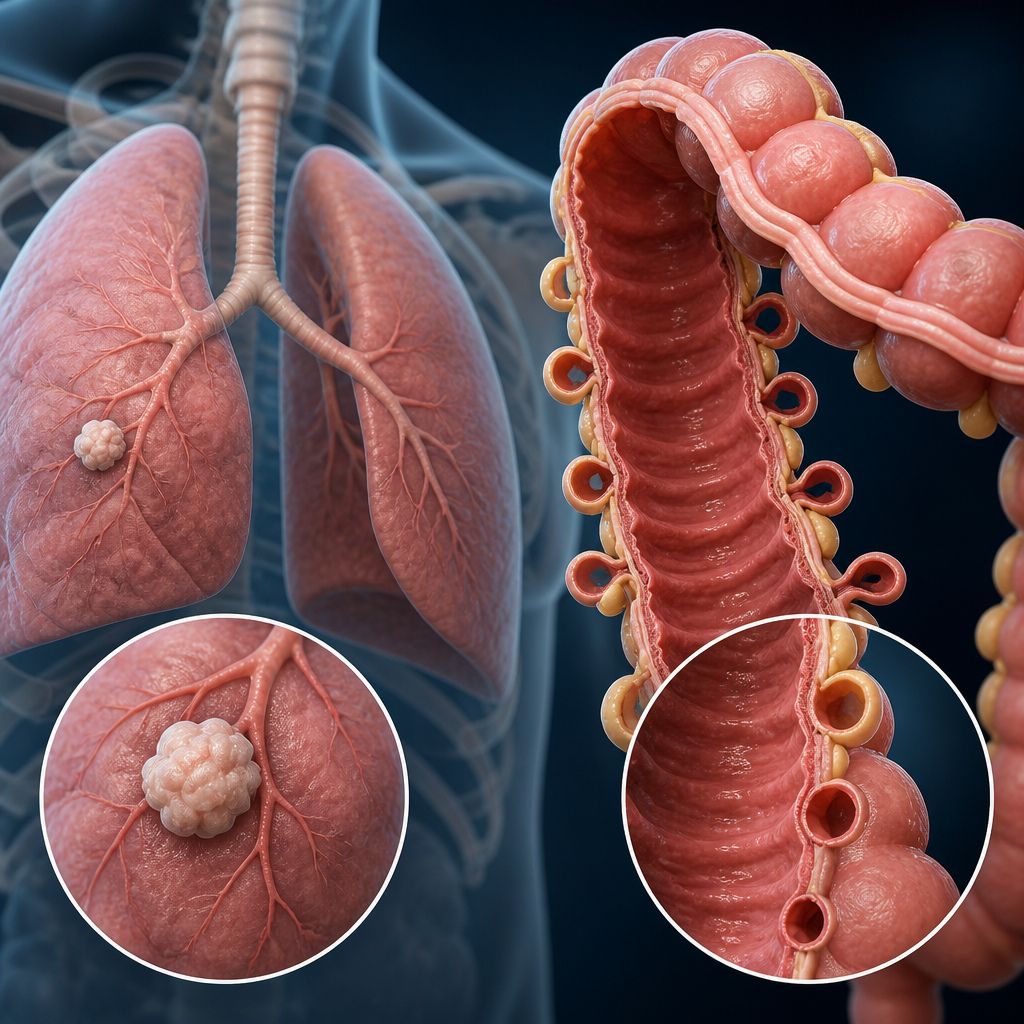
Medical terms found on an imaging report can sometimes be confusing, especially when they sound unfamiliar. Lung nodule and diverticulosis are two very different conditions that affect completely different parts of the body. A lung nodule involves the lung, while diverticulosis affects the colon, or large intestine.
Understanding the difference between these conditions can help you interpret medical information more clearly and know when further evaluation may be needed.
What Is a Lung Nodule?
A lung nodule, also called a pulmonary nodule, is a small abnormal spot or area of growth in the lung. Lung nodules are commonly discovered incidentally during a chest X-ray or CT scan performed for another reason. Most lung nodules are benign, meaning they are not cancerous.
Lung nodules can develop for several reasons, including:
- Previous or current infections
- Inflammation or autoimmune conditions
- Scar tissue in the lungs
- Exposure to certain inhaled substances
- Benign tumors
- Lung cancer in some cases
A lung nodule does not automatically mean cancer. Doctors consider factors such as the nodule’s size, appearance, growth over time, age, smoking history, and other risk factors when deciding whether follow-up testing is necessary.
Symptoms of a Lung Nodule
Most small lung nodules do not cause symptoms. When symptoms occur, they may include:
- Persistent cough
- Chest discomfort or pain
- Shortness of breath
- Wheezing
- Coughing up blood
- Fatigue
- Unexplained weight loss
These symptoms can also be caused by many other lung conditions, so they do not necessarily mean that a lung nodule is cancerous.
What Is Diverticulosis?
Diverticulosis is a digestive condition in which small pouches called diverticula form and push outward through weak areas of the colon wall. These pouches are most commonly found in the lower part of the colon, particularly the sigmoid colon.
Diverticulosis is common, particularly with increasing age. Many people have diverticulosis without experiencing any symptoms at all. It may be discovered during a colonoscopy or imaging test performed for another reason.
When diverticula become inflamed, the condition is called diverticulitis. Diverticulosis and diverticulitis are therefore related, but they are not the same thing.
Diverticulosis vs Diverticulitis
One of the most important distinctions is the difference between diverticulosis vs diverticulitis.
Diverticulosis means that pouches have formed in the colon. It often causes no symptoms.
Diverticulitis occurs when one or more of these pouches become inflamed. It can cause more noticeable and sometimes severe symptoms.
Diverticulitis Symptoms
Common diverticulitis symptoms include:
- Abdominal pain, often on the lower left side
- Fever and chills
- Nausea or vomiting
- Constipation or diarrhea
- Abdominal tenderness
The pain may appear suddenly and be severe, although it can sometimes start mildly and become worse over several days.
What Does a Diverticulitis Attack Feel Like?
People can experience diverticulitis differently, but a typical attack may feel like persistent abdominal pain or tenderness, particularly in the lower-left abdomen. The pain can be significant and may occur along with fever, chills, nausea, vomiting, constipation, or diarrhea.
Severe or worsening abdominal pain, fever, vomiting, significant bleeding, or other concerning symptoms should be evaluated promptly by a healthcare professional because diverticulitis can sometimes lead to complications.
Lung Nodule vs Diverticulosis: Key Differences
| Feature | Lung Nodule | Diverticulosis |
|---|---|---|
| Location | Lung | Colon |
| What it is | Small abnormal spot or growth in lung tissue | Small pouches in the colon wall |
| How it is commonly found | Chest X-ray or CT scan | Colonoscopy or abdominal imaging |
| Typical symptoms | Usually none when small | Often none |
| Possible complications | Depends on the underlying cause | Diverticulitis or diverticular bleeding |
| Cancer connection | Some nodules can be cancerous, but most are benign | Diverticulosis itself is not a lung or colon cancer diagnosis |
| Typical follow-up | May require repeat imaging or additional testing | Depends on symptoms and whether complications occur |
The key point is that a lung nodule and diverticulosis are not related conditions. One involves the respiratory system and the other involves the digestive system.
What Causes Colonic Diverticulosis?
Colonic diverticulosis develops when pouches form through weaker areas of the colon wall. The exact cause is not completely understood, but factors associated with diverticular disease include aging and certain lifestyle factors.
A diet low in fiber and high in red meat may increase the risk of diverticulitis, while physical inactivity, smoking, obesity, and certain medications may also contribute to risk.
Diverticulosis Diet: What Should You Eat?
A diverticulosis diet generally focuses on an overall healthy eating pattern that provides adequate fiber, particularly for people with chronic symptoms or a history of diverticulitis. Foods that can provide fiber include:
- Whole grains
- Fruits
- Vegetables
- Beans and lentils
- Chickpeas
- Other fiber-rich foods
NIDDK notes that fiber can be increased gradually to help the digestive system adjust. Most people with diverticulosis do not need to routinely avoid nuts, popcorn, or seeds; older advice to avoid these foods is not supported by more recent evidence.
Dietary needs can vary, particularly during or immediately after an episode of diverticulitis, so it is best to follow the eating plan recommended by your healthcare professional.
How Are These Conditions Diagnosed?
Lung Nodule Diagnosis
A lung nodule is usually identified on a chest X-ray or CT scan. Depending on its size, appearance, and a person’s risk factors, a healthcare provider may recommend follow-up imaging or additional testing. In selected cases, tests such as a PET scan, bronchoscopy, or biopsy may be considered.
Diverticulosis Diagnosis
Doctors may diagnose diverticular disease using a medical history, physical examination, blood or stool tests, imaging such as CT, and sometimes colonoscopy. Diverticulosis may also be discovered incidentally during an examination performed for another reason.
Treatment and Management
Treatment depends on the specific condition and the individual’s medical history.
Small, low-risk lung nodules may simply be monitored with follow-up imaging. If a nodule is associated with an infection or another underlying condition, treatment may focus on that cause. Suspicious nodules may require additional investigation.
Uncomplicated diverticulosis often does not require specific treatment. For people with symptoms or a history of diverticulitis, doctors may recommend dietary and lifestyle changes, including increased fiber when appropriate. Diverticulitis may require medical treatment, and severe cases or complications can require hospitalization or surgery.
When Should You See a Doctor?
You should discuss an unexpected lung nodule with your healthcare provider so that its size, appearance, and appropriate follow-up can be determined.
For digestive symptoms, seek medical evaluation if you develop persistent or severe abdominal pain, fever, vomiting, or rectal bleeding. Diverticular bleeding can sometimes be serious, while diverticulitis can occasionally cause complications such as an abscess, obstruction, perforation, or peritonitis.
Final Thoughts
The difference between a lung nodule and diverticulosis is straightforward: they affect different organs and represent different types of findings. A lung nodule is an abnormal spot in the lung that is often found on imaging and is usually benign, while diverticulosis refers to small pouches that form in the wall of the colon.
Understanding diverticulosis, diverticulitis symptoms, colonic diverticulosis, diverticulosis vs diverticulitis, diverticulosis diet, and what a diverticulitis attack may feel like can make medical information easier to understand. However, an imaging finding or new symptom should always be interpreted in the context of your individual health history by a qualified healthcare professional.